Kingdom Discipleship, Love In Action

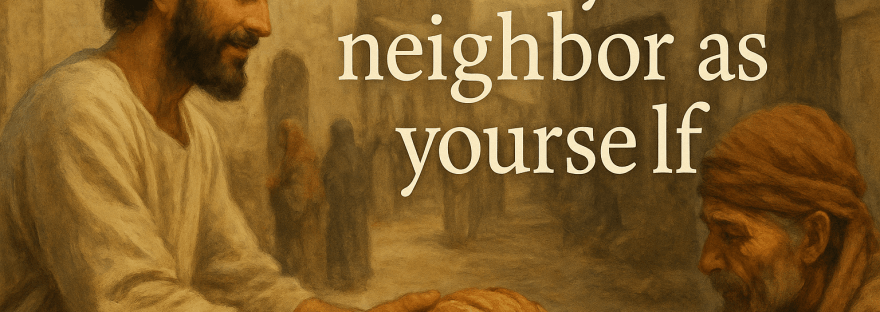
Love Your Neighbor as Yourself

From the series “The Commands of Christ — Love in Action”

“You shall love your neighbor as yourself.”
Matthew 22:39, NASB 1995

This is not a peripheral command—it is the second greatest, according to Christ Himself. Everything written in the Law and the Prophets hangs on it. And yet it may be the most quoted, least obeyed words in the Church today.

Loving your neighbor is not a theory. It is not a metaphor. It is a command.

Not to admire others from afar.
Not to tolerate them from behind a smile.
But to love them—genuinely, practically, sacrificially.

“On these two commandments depend the whole Law and the Prophets.”
Matthew 22:40

The first command is to love God with all your heart. The second is the evidence that the first is true.


We cannot love God and hate people.
We cannot worship Christ and despise His image-bearers.
We cannot call ourselves faithful disciples while walking past the wounded, the poor, the lonely, or the inconvenient.

The command to love our neighbor is not based on their worthiness, but on God’s worthiness—on what He has done in us and what He now wants to do through us.


“For the entire Law is fulfilled in one word, in the statement: ‘You shall love your neighbor as yourself.’”
Galatians 5:14

This is love that walks across the street.
Love that listens when it would rather speak.
Love that gives when no one is watching.
Love that welcomes the stranger, feeds the hungry, prays for the broken, and seeks peace when offended.


The early Church did not love in theory. They loved in deed and truth.

The Epistle to Diognetus (2nd century):
“They share their table with all, but not their bed. They love all men, and are persecuted by all. They repay hatred with kindness… and do good to those who harm them.”
Chapter 5–6

Clement of Rome (c. AD 96):
“Let us be kind to one another according to the compassion and gentleness of Christ… let the strong care for the weak, and the rich provide for the poor, without boasting.”
1 Clement, Ch. 38

Their faith was visible. Their love was active. And their neighbors knew it.


Loving your neighbor means loving the people God has placed near you.
Not just your friends.
Not just the ones who think like you.
But the ones who inconvenience you.
The ones who have nothing to give you in return.
The ones who test your patience, hurt your pride, or sit in silence right next to you.

And yes, it includes the stranger.
Because you were once a stranger to God.
And He welcomed you.


Love your neighbor.
Not with mere sentiment, but with sacrificial mercy.
Not for recognition, but for Christ’s glory.
Not only in the easy moments, but especially in the hard ones.

This is the love that fulfills the Law.
This is the love that reflects our King.


📚 Sources & References

Love Your Neighbor as Yourself

Scripture (NASB 1995):

  • Matthew 22:39–40 – “You shall love your neighbor as yourself…”
  • Galatians 5:14 – “The whole Law is fulfilled in one word…”

Ante-Nicene Sources:

  • The Epistle to Diognetus, Chapters 5–6.
    “They love all men, and are persecuted by all… repay hatred with kindness.”
    [Available at: EarlyChristianWritings.com/diognetus.html]
  • Clement of Rome, 1 Clement, Chapter 38.
    “Let us be kind… let the strong care for the weak…”
    [Available at: NewAdvent.org/fathers/1010.htm]
2–4 minutes

Leave a comment

Devotions, Teen Devotions

🏡 Kingdom Family Devotional — Day 69

“For the gate is narrow and the way is constricted that leads to life…”

Matthew 7:13–14 NASB1995

🚧 Preparing Our Children for the Narrow Path

As mothers guiding older children, we are equipping them for a lifetime of choices. Jesus calls His followers to a constricted, narrow path—a way that isn’t always easy or popular, but one that leads to life.

In a world of options, we help them discern the road that honors Christ. We model perseverance, not popularity. Conviction, not convenience.

🗣 Family Conversation:

  • What does the narrow way look like in our home decisions?
  • How can we support each other when walking it feels lonely?

👣 Kingdom Practice:

Share examples from your life when the narrow way was hard—but right. Ask your children what narrow choices they’re facing.

🙏 Prayer:

Lord, help our family walk the road that leads to life. May we not fear being few, as long as we walk with You. Amen.

Devotions, Teen Devotions

😎 Kingdom Teen Devotional — Day 69

“Enter through the narrow gate…”

Matthew 7:13–14 NASB1995

🛤 Not the Easy Route

Everyone wants to belong, to go with the flow—but Jesus flips the script. The easy road isn’t the right one. The narrow gate means making choices that may cost you—friends, attention, status. But it leads to life.

It’s okay to be different if it means being right with God. Don’t be afraid to walk the unpopular road when you know Jesus is ahead of you.

🔎 Real Talk:

  • Are there ways you’ve been tempted to take the easy road?
  • What does the narrow gate look like in your school or online life?

🙏 Prayer:

Jesus, give me courage to take the narrow way. Help me live for what lasts, not what’s loud. Amen.

Children's Devotionals, Devotions

🧒 Kids Devotional — Day 69

“The road that leads to life is narrow, but the wide road leads to trouble.”

Matthew 7:13–14 (Paraphrased)

🛣 Two Roads

Jesus tells us there are two roads: a big, busy one that lots of people take—but it leads to trouble. Then there’s a smaller road, harder to find, but it leads to life!

🎈 Kingdom Tip:

The right way isn’t always the popular one. Following Jesus means sometimes saying no to what everyone else is doing.

💬 Think About It:

  • Have you ever had to choose the right thing when it was hard?
  • What helps you follow Jesus even when others don’t?

✨ Let’s Pray:

Jesus, help me choose the narrow road. I want to follow You, even when it’s tough. Amen.

Devotions, Women's Devotionals

🌿 Kingdom Living Devotional — Day 69

“Enter through the narrow gate; for the gate is wide and the way is broad that leads to destruction, and there are many who enter through it. For the gate is narrow and the way is constricted that leads to life, and there are few who find it.”

Matthew 7:13–14 NASB1995

🚪 The Narrow Way

Jesus doesn’t paint a rosy picture here. He describes a difficult, unpopular path—constricted and narrow. But it’s the way to life. That narrowness isn’t legalism. It’s loyalty. It’s letting go of our way to follow His.

Culture invites us to the wide path: comfort, compromise, crowd-pleasing. But the narrow way presses us to walk by faith—not sight, not approval, not ease.

🕊 Ante-Nicene Insight:

The early believers understood the narrow way. Their lives, choices, and even their deaths testified to a path that cost much—but gained Christ.

💭 Reflect:

  • Am I trying to widen God’s road to fit my lifestyle?
  • What must I leave behind to walk through the narrow gate?

✨ Prayer:

Lord, lead me on Your narrow path. Even if it’s lonely, help me walk in truth, eyes fixed on You. Amen.

Children's Devotionals, Devotions

🧒 Kids Devotional — Day 68

“Even people who aren’t perfect know how to give good gifts. So God gives even better ones!”

— Matthew 7:11 (Paraphrased)

🎉 God Loves to Give

Think about someone you love. Would you try to give them something nice? Of course! And God, who loves even better than anyone, wants to give you good things too.

🎈 Kingdom Tip:

God’s gifts might not be toys or games—but love, peace, and help when we need it.

💬 Think About It:

Can you name some of the good things God has given you?

What is something you’re thankful for today?

✨ Let’s Pray:

Dear God, thank You for being better than the best parent. Help me see how You’re blessing me every day! Amen.

Devotions, Women's Devotionals

🌿 Kingdom Living Devotional — Day 68

“So if you, despite being evil, know how to give good gifts to your children, how much more will your Father who is in heaven give what is good to those who ask Him!”

Matthew 7:11 NASB1995

🎁 The Heart Behind the Gift

Jesus brings it home: even flawed human parents know how to care for their children. So how much more should we trust the perfect goodness of our heavenly Father?

God is not stingy. He’s not absent. He’s not cruel. If we, in our imperfection, try to bless those we love—how much more does He?

🕊 Ante-Nicene Insight:

The early church saw the “good gifts” as more than material. They prized the Holy Spirit, wisdom, peace, and endurance. These were the treasures passed down through suffering, and they were counted as joys.

💭 Reflect:

  • What do you truly believe about God’s heart?
  • Do you trust that what He gives is truly good, even when it stretches you?

✨ Prayer:

Father, forgive my doubts. Help me believe—not just in Your power—but in Your goodness. Amen.

Devotions, Family Devotionals

🏡 Kingdom Family Devotional — Day 68

“So if you, despite being evil, know how to give good gifts…”

Matthew 7:11 NASB1995

🎁 Shaping Our Children’s View of God

As mothers raising older children, we have the opportunity to shape how they understand God’s character. Jesus’ words remind us that God’s heart is generous, wise, and good.

Our children will form their theology not only from sermons—but from how we speak about God in our homes. Let our language be filled with trust in His goodness, even in trials.

🗣 Family Conversation:

  • How do we define “good” in our home? Is it comfort or Christlikeness?
  • Share a time when a hard moment later proved to be a gift in disguise.

👣 Kingdom Practice:

Talk through the difference between earthly gifts and spiritual ones—how peace, forgiveness, or courage are some of God’s greatest blessings.

🙏 Prayer:

Lord, let our family treasure the gifts You give. Teach us to desire what You call good. Amen.

Devotions, Teen Devotions

😎 Kingdom Teen Devotional — Day 68

“So if you, despite being evil, know how to give good gifts…”

Matthew 7:11 NASB1995

🎯 God Is Better Than Good

This verse cuts through every doubt about God’s character. He’s not reluctant. He’s not waiting for you to deserve blessings. He is better than the best version of a human parent.

But those gifts aren’t always status, success, or stuff. Often, they’re strength, clarity, and peace in chaos.

🔎 Real Talk:

  • What kind of “good gifts” are you hoping for?
  • Are you open to receiving what God knows is good—even if it’s different from what you expect?

🙏 Prayer:

God, I’ve expected certain things—and felt let down. But help me see what You give as better. Grow my trust in who You are. Amen.

Kingdom Discipleship, Love In Action

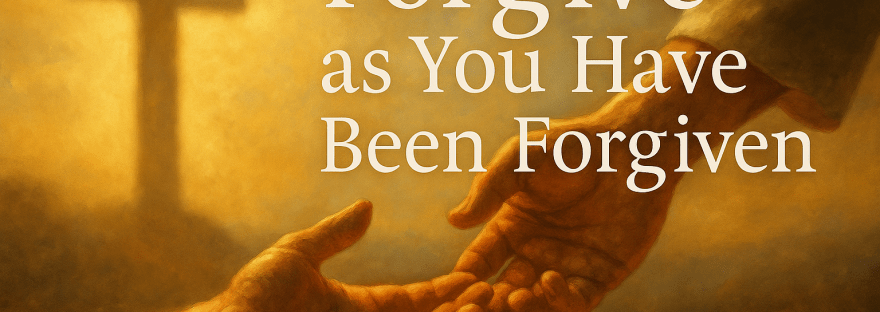
Forgive as You Have Been Forgiven

From the series “The Commands of Christ — Love in Action”

Love doesn’t keep score.
It doesn’t hold grudges, demand repayment, or wait for the apology it thinks it deserves.
Love forgives—completely, freely, and sacrificially.

“Forgive, and you will be forgiven.”
Luke 6:37, NASB 1995

This is not a gentle suggestion. It is a command from the lips of the One who would be betrayed, denied, beaten, and crucified—and who still cried out, “Father, forgive them.”

Forgiveness is not weakness.
It is not forgetting.
It is not denying the pain.
It is the power to cancel a debt out of reverence for the mercy we’ve been shown.


“Be kind to one another, compassionate, forgiving each other, just as God in Christ also has forgiven you.”
Ephesians 4:32

If you have been forgiven by Christ, then forgiveness is no longer optional—it is the overflow of new life.

When we withhold it, we are not just clinging to hurt—we are denying the very gospel we claim to believe.

“If you do not forgive other people, then your Father will not forgive your offenses.”
Matthew 6:15

These are sobering words. Not because forgiveness earns salvation—but because refusal to forgive proves we have not truly received the mercy of God.


The early Church knew this. They were slandered, persecuted, imprisoned—and yet they forgave.

The Martyrdom of Polycarp (AD 155):
“He prayed for all… even those who were about to execute him, remembering the words of his Lord.”
Chapter 14

Tertullian (c. AD 200):
“We repay injuries with kindness… and when we are cursed, we bless. We follow our Lord in this, and forgive so that we may be forgiven.”
Apology, Chapter 39

They forgave—not because it was easy, but because the cross had made it possible.


Forgiveness is not something we wait to feel.
It is a choice made in obedience to Christ.
It is not the same as reconciliation—but it is always the first step.

Some wounds run deep.
But the cross goes deeper.
And where Christ reigns, bitterness cannot remain.


You cannot carry the cross and a grudge at the same time.
You must choose.

To walk in love is to walk in forgiveness—
Even if they never say they’re sorry.
Even if they don’t understand what they did.
Even if the pain is still fresh.

Because Christ forgave you.
And He commands you to do the same.


📚 Sources & References

Forgive as You Have Been Forgiven

Scripture (NASB 1995):

  • Luke 6:37 – “Forgive, and you will be forgiven.”
  • Ephesians 4:32 – “Forgiving each other, just as God in Christ also has forgiven you.”
  • Matthew 6:15 – “If you do not forgive… your Father will not forgive…”

Ante-Nicene Sources:

  • The Martyrdom of Polycarp, Chapter 14.
    “He prayed for all… even those who were about to execute him.”
    [Available at: EarlyChristianWritings.com or NewAdvent.org]
  • Tertullian, Apology, Chapter 39.
    “We repay injuries with kindness… we follow our Lord in this.”
    [Available at: NewAdvent.org]
2–3 minutes

Leave a comment