Kingdom Discipleship, Love In Action

Do Not Store Up Treasures on Earth

From the series “The Commands of Christ — Love in Action”

“Do not store up for yourselves treasures on earth… but store up for yourselves treasures in heaven.”
Matthew 6:19–20, NASB 1995

Love for Christ changes what we value.
It reorders the heart.
It frees us from chasing what cannot last and calls us to invest in what cannot be lost.

Jesus didn’t say, “Give everything away so you’ll be poor.”
He said, “Don’t treasure the temporary.”

Because where your treasure is, your heart will be also (Matthew 6:21).
And Jesus wants your heart.


Earthly treasures fade.
Moths eat, rust corrodes, thieves break in.
The kingdoms of this world will fall, and all that seemed secure will one day vanish.
But those who belong to Christ are called to live for another Kingdom—one that cannot be shaken.

To love Christ is to loosen our grip on this world.
Not because the things of earth are evil, but because they are fleeting.


“Set your mind on the things above, not on the things that are on earth.”
Colossians 3:2

The early Church lived this out radically.
They weren’t known for wealth or power—but for generosity and simplicity.
They did not store up—they gave freely.
Because they believed Jesus was coming soon, and they longed to be found faithful.

Justin Martyr (c. AD 150):
“We who once valued wealth above all now bring what we have to share… so that none among us may suffer need.”
First Apology, Ch. 14

Tertullian (c. AD 200):
“What we have is not hoarded in chests, but distributed for the poor… for we know it is better to have treasure in heaven than gold in hand.”
Apology, Ch. 39

Their hearts were not tied to empires or coin purses.
They lived as strangers and exiles on the earth (Hebrews 11:13).
And the world saw something in them it could not understand:
Contentment. Joy. Eternity in view.


We cannot say we love Christ and still live like the world is our home.
We cannot cling to earthly security and walk in faith.
We cannot hoard what was given to us to bless others.

This doesn’t mean every Christian must take a vow of poverty.
But it does mean every Christian must take a vow of stewardship—a willingness to use every gift, dollar, and possession for the glory of God and the good of His people.


“Sell your possessions and give to charity; make yourselves money belts that do not wear out… an unfailing treasure in heaven.”
Luke 12:33

This is not loss. It is wisdom.
It is investing in eternity.

To obey this command is to trust God more than money.
It is to live free from the grip of materialism.
And it is to live ready—eyes fixed on a Kingdom that is coming soon.


📚 Sources & References

Do Not Store Up Treasures on Earth

Scripture (NASB 1995):

  • Matthew 6:19–21 – “Do not store up… treasures on earth…”
  • Colossians 3:2 – “Set your mind on the things above…”
  • Luke 12:33 – “Sell your possessions… treasure in heaven.”
  • Hebrews 11:13 – “Strangers and exiles on the earth.”

Ante-Nicene Sources:

  • Justin Martyr, First Apology, Ch. 14.
    “We bring what we have to share… none among us may suffer need.”
    [Available at: EarlyChristianWritings.com or CCEL.org]
  • Tertullian, Apology, Ch. 39.
    “What we have is not hoarded… we know it is better to have treasure in heaven…”
    [Available at: NewAdvent.org]
2–4 minutes

Leave a comment

Biblical Interpretation, Kingdom Discipleship

The Role of the Holy Spirit in Reading Scripture

How to Read the Bible Series

You open your Bible, and the words lie before you.
But without the Author beside you, the meaning remains hidden. The Word is alive (Hebrews 4:12), yet it breathes only when the Spirit breathes into us. Many read the Bible as information; few read it as revelation. The early Church knew the difference—and their lives reflected it.

The Ante-Nicene believers didn’t read Scripture through systems. They weren’t led by councils or creeds. They were led by the Spirit of Truth. The Bereans searched daily, but they did not search alone. The Spirit was their Teacher—and He must be ours.


Scripture Focus:

“But when He, the Spirit of truth, comes, He will guide you into all the truth…”
John 16:13, NASB1995


The Spirit Is the Teacher

The Lord never left His people with a book and no Guide. Jesus promised that the Spirit would lead us into all truth—not through mystical experiences, but through the Word He authored. As Paul wrote:

“We have received… the Spirit who is from God, so that we may know the things freely given to us by God.”
1 Corinthians 2:12

The Spirit does not give new revelation but illumines what has already been given. He opens our eyes to behold (Psalm 119:18), convicts us of truth, and teaches with clarity. No theologian or denomination can replace His voice.


The Anointing That Abides

“You have no need for anyone to teach you… but His anointing teaches you about all things…”
1 John 2:27

This doesn’t reject godly teachers—it rejects dependence on man. The Bereans didn’t check with Paul’s résumé; they tested his message with Scripture, led by the Spirit. The early Church walked in the same pattern, trusting the Spirit’s conviction above the authority of men.


The Spirit Knows the Mind of God

He is not merely a Helper; He is God. He searches the deep things of God (1 Corinthians 2:10–11), and He helps us pray, read, and discern according to the will of the Father (Romans 8:27). When we read Scripture with the Spirit, we’re not just gathering knowledge—we are encountering the very thoughts of God.


The Spirit and the Word Are One

“The words that I have spoken to you are spirit and are life.”
John 6:63

The Holy Spirit will never contradict the written Word because He authored it. If a “revelation” or interpretation conflicts with Scripture, it is not from the Spirit. The Spirit always leads us back to Jesus, the Word made flesh, and He always glorifies the Father through obedience and truth.


Walking in Spirit-Led Reading

  • Pray before reading. Invite the Spirit to teach, correct, and reveal.
  • Read with surrender. Revelation follows obedience (John 7:17).
  • Let Scripture interpret Scripture. The Spirit wrote a unified message.
  • Test all things. Even beloved teachings must align with the Spirit’s Word.

Return to the Spirit. Return to Illumination.

We do not open the Bible to master it—we open it to be mastered by Christ through the Spirit. The early Church knew this. They did not walk by the traditions of men but by the illumination of the Holy Spirit through the Scriptures.

Let us walk as they walked. Let us read with the Author as our Teacher.

Return to the Word. Return to the Spirit. And find truth that transforms.


2–3 minutes

Leave a comment

Kingdom Discipleship, Love In Action

Be Reconciled to Your Brother

From the series “The Commands of Christ — Love in Action”

“Therefore, if you are presenting your offering at the altar, and there you remember that your brother has something against you, leave your offering there… and go; first be reconciled to your brother, and then come and present your offering.”
Matthew 5:23–24, NASB 1995

Worship does not bypass reconciliation.
God is not honored by offerings brought from an unforgiving heart.
Love that honors Christ must also seek peace with His people.

Jesus does not say, “If you are angry, go.”
He says, “If your brother has something against you…”
This is not about waiting to be approached. It is about taking responsibility—even when the pain is mutual, the fault is unclear, or the path feels awkward.


“If possible, so far as it depends on you, be at peace with all people.”
Romans 12:18

Reconciliation is not always possible.
But obedience always is.
We may not always restore the relationship, but we must remove the offense.

God does not want worship from hearts that are unwilling to be humbled.
He wants truth in the inner being (Psalm 51:6).
And that means going—not in pride, but in repentance.
Not to accuse, but to own.
Not to lecture, but to love.


The early Church knew that unity was not a bonus. It was a requirement.

The Didache (c. AD 50–100):
“Do not let the sun go down on your anger… and do not come together with a grudge in your heart. Let your sacrifice be pure.”
Didache, Ch. 14

Clement of Rome (c. AD 96):
“Let us put away the quarrels that arose from foolishness… let us be reconciled in Christ, and walk in the fear of the Lord.”
1 Clement, Ch. 51

They knew what we often forget:
Reconciliation is not a side issue.
It is part of what it means to be a holy priesthood, offering spiritual sacrifices acceptable to God (1 Peter 2:5).


Sometimes the hardest obedience is not confronting those who hurt us—
but seeking peace with those we’ve hurt.
Even if unintentionally.
Even if they misunderstood.
Even if it means bearing shame.

But this is the way of love.
This is the way of the cross.
And it is the command of Christ.


If we want to walk in the presence of God, we must not carry bitterness toward the people of God.
We must seek peace.
We must repent where we have sinned.
We must release where we have been wronged.

This is not weakness—it is worship.


📚 Sources & References

Be Reconciled to Your Brother

Scripture (NASB 1995):

  • Matthew 5:23–24 – “First be reconciled to your brother…”
  • Romans 12:18 – “If possible… be at peace with all people.”
  • Psalm 51:6 – “You desire truth in the innermost being.”
  • 1 Peter 2:5 – “A holy priesthood, offering spiritual sacrifices…”

Ante-Nicene Sources:

  • The Didache, Chapter 14.
    “Do not come together with a grudge in your heart… Let your sacrifice be pure.”
    [Available at: EarlyChristianWritings.com]
  • Clement of Rome, 1 Clement, Chapter 51.
    “Let us put away the quarrels… let us be reconciled in Christ.”
    [Available at: NewAdvent.org]
2–3 minutes

Leave a comment

Kingdom Discipleship, Love In Action

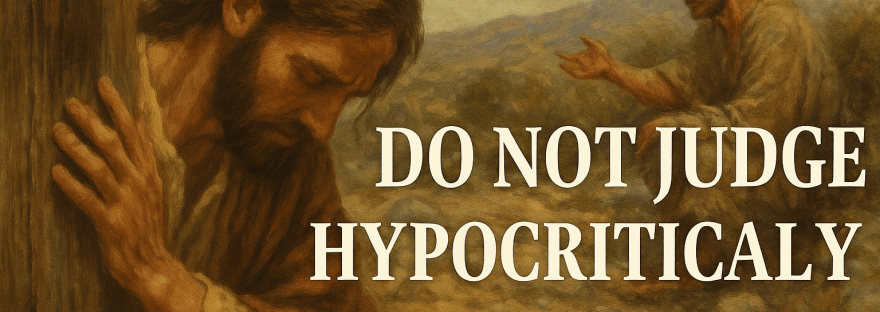
Do Not Judge Hypocritically

From the series “The Commands of Christ — Love in Action”

“Do not judge, so that you will not be judged.”
Matthew 7:1, NASB 1995

This verse has become one of the most misused and misunderstood words of Christ—quoted by those who reject accountability and often avoided by those who are called to speak truth. But Jesus was not forbidding judgment. He was forbidding hypocrisy.

He was not calling His people to silence.
He was calling them to purity of heart before speaking.

“Why do you look at the speck that is in your brother’s eye, but do not notice the log that is in your own eye?”
Matthew 7:3

The command is not “never judge,” but “judge with righteous judgment.” (John 7:24)
To love as Christ commands is to speak truth—not with pride, but with humility.
Not with arrogance, but with a heart willing to be examined first.


Hypocritical judgment crushes.
It condemns without compassion.
It sees clearly in others but is blind to its own sin.
It says, “Let me fix you,” while refusing to be sanctified.

“First take the log out of your own eye, and then you will see clearly to take the speck out of your brother’s eye.”
Matthew 7:5

This is not a call to silence truth—it is a call to truth that flows from repentance.


The early Church knew this danger.
They preached boldly—but they also examined themselves continually.
They spoke of sin—but never from superiority.

Clement of Rome (c. AD 96):
“Let each of us examine himself first… for judgment must begin with the household of God.”
1 Clement, Ch. 56

The Didache (c. AD 50–100):
“Do not hate any man; but some you are to reprove, and others to pray for. Yet do nothing without examining yourself first.”
Didache, Ch. 2–3

Judgment without self-awareness is dangerous.
Correction without humility is damaging.
But silence in the name of comfort is not love—it is cowardice.


To obey Christ here is to walk a narrow path:
We are called to confront sin with clean hands and a broken heart.
We are called to uphold righteousness without self-righteousness.
We are called to correct others only as those who are also under correction.


So before we speak, we must kneel.
Before we confront, we must repent.
And if we are unwilling to let God deal with us first, we have no business pointing at the sins of others.

Because love does not seek to shame.
Love seeks to restore.
And judgment without mercy is not Kingdom love—it is Pharisaical pride.


📚 Sources & References

Do Not Judge Hypocritically

Scripture (NASB 1995):

  • Matthew 7:1–5 – “Do not judge… first take the log out of your own eye…”
  • John 7:24 – “Do not judge according to appearance, but judge with righteous judgment.”

Ante-Nicene Sources:

  • Clement of Rome, 1 Clement, Ch. 56.
    “Let each of us examine himself first… judgment must begin with the household of God.”
    [Available at: NewAdvent.org]
  • The Didache, Chapters 2–3.
    “Do not hate… do nothing without examining yourself first.”
    [Available at: EarlyChristianWritings.com]

2–3 minutes

Leave a comment

Kingdom Discipleship, Love In Action

Take Up Your Cross Daily

From the series “The Commands of Christ — Love in Action”

“If anyone wants to come after Me, he must deny himself, take up his cross daily, and follow Me.”
Luke 9:23, NASB 1995

This is not a call to comfort.
It is not an invitation to moral improvement.
It is a summons to die.

To follow Christ is to walk the road He walked.
There is no other path to life but the one that leads through death—death to self, to sin, to pride, to reputation, to everything the world says is valuable.

The cross is not a symbol of inconvenience.
It is a tool of execution.

And Jesus didn’t say, “Take it up once.”
He said, “Daily.”


The command to deny yourself flies in the face of everything our culture worships.
The world says, “Love yourself. Express yourself. Exalt yourself.”
Christ says, “Crucify yourself.”

Not literally, but spiritually.
Not in despair, but in obedience.

“Those who belong to Christ Jesus have crucified the flesh with its passions and desires.”
Galatians 5:24

This is the heart of discipleship.
Not that we add Jesus to our lives—but that we surrender our lives to Him completely.


To take up your cross daily means you no longer belong to yourself.
Your time. Your body. Your rights. Your dreams.
All laid down in loving surrender.

“He died for all, so that those who live would no longer live for themselves, but for Him who died and rose on their behalf.”
2 Corinthians 5:15

The early Church did not water this down.
They didn’t lure people in with promises of ease.
They preached Christ—and Him crucified. And they embraced suffering, rejection, and even death, because they had already died to this world.


Ignatius of Antioch (c. AD 107):
“Let me be food for the wild beasts… that I may be found the pure bread of Christ. I no longer desire to live according to the flesh, but to suffer for Christ.”
Letter to the Romans, Ch. 4

Tertullian (c. AD 200):
“To bear the name of Christ is to bear the burden of the cross… not only in suffering but in denying our sinful nature daily.”
On the Resurrection of the Flesh, Ch. 23

They did not cling to their comfort.
They clung to the cross.
Because they knew: to lose your life for Christ is to find it.


This is not a one-time prayer.
It is a daily surrender.
It’s not about perfection—but persistence.

Every day, you wake up and lay your life down again.
Every day, you choose obedience over pride, holiness over comfort, truth over popularity.

And every day, the world may look at you and see loss.
But heaven sees love.

Because no one loves Christ more than the one who is willing to die for Him—and live for Him every single day.


📚 Sources & References

Take Up Your Cross Daily

Scripture (NASB 1995):

  • Luke 9:23 – “Deny yourself, take up your cross daily…”
  • Galatians 5:24 – “Those who belong to Christ have crucified the flesh…”
  • 2 Corinthians 5:15 – “No longer live for themselves, but for Him…”

Ante-Nicene Sources:

  • Ignatius of Antioch, Letter to the Romans, Ch. 4.
    “Let me be food for the wild beasts… I no longer desire to live according to the flesh.”
    [Available at: EarlyChristianWritings.com]
  • Tertullian, On the Resurrection of the Flesh, Ch. 23.
    “To bear the name of Christ is to bear the burden of the cross…”
    [Available at: NewAdvent.org]
2–4 minutes

Leave a comment

Devotions, Teen Devotions

😎 Kingdom Teen Devotional — Day 70

“You will know them by their fruits.”

Matthew 7:15–16 NASB1995

🎭 When Looks Deceive

It’s easy to trust influencers, leaders, even pastors—because they sound good, quote Scripture, or seem sincere. But Jesus says: check the fruit.

Fruit is how they treat people. How they handle sin. Whether they glorify themselves—or God. Don’t be fooled by sheep’s clothing. Look deeper.

🔎 Real Talk:

  • Who do you listen to online or at church?
  • Are their lives marked by Christ or just catchy words?

🙏 Prayer:

God, help me pay attention to the fruit, not just the show. Teach me to discern truth from lies. Amen.

Children's Devotionals, Devotions

🧒 Kids Devotional — Day 70

“Watch out for people who look kind but want to trick you. You can tell who they are by what they do.”

Matthew 7:15–16 (Paraphrased)

🐺 Not All Sheep Are Safe

Jesus says some people pretend to be good, but really, they want to hurt others. They act nice—but their actions tell the truth.

🍎 Kingdom Tip:

Look at what someone does, not just what they say. A kind heart shows in kind actions.

💬 Think About It:

  • Has someone ever acted nice but did something mean?
  • How can we be sure to follow good examples?

✨ Let’s Pray:

Jesus, help me see what’s true. I want to follow people who really love You. Amen.

Devotions, Women's Devotionals

🌿 Kingdom Living Devotional — Day 70

“Beware of the false prophets, who come to you in sheep’s clothing, but inwardly are ravenous wolves. You will know them by their fruits.”

Matthew 7:15–16 NASB1995

🧠 Discernment in Disguise

Jesus warns us: not everyone who looks like a teacher of truth is speaking for God. Some wear a sheep’s cloak but carry a wolf’s hunger. How do we know? Their fruit—what their life produces. Not charm, credentials, or charisma, but character.

Don’t just test teachings—test lifestyles. Does it lead to pride or humility? Control or love? Does it bear the fruit of the Spirit, or the works of the flesh?

🕊 Ante-Nicene Insight:

The early Church was deeply discerning. They weighed all teaching against Scripture and the life of Christ, refusing to follow anyone who led away from holiness or obedience.

💭 Reflect:

  • Am I more drawn to someone’s words or their fruit?
  • Do I test what I hear against God’s Word and character?

✨ Prayer:

Lord, give me eyes to see and a heart to discern. Help me not be swayed by appearances but grounded in truth. Amen.

Biblical Interpretation, Editor's Picks, Kingdom Discipleship

How to Read the Bible — Returning to the Way of the Bereans and the Ante-Nicene Church

How to Read the Bible Series

You hold the Bible in your hands.
Sixty-six books. One Author. One Spirit. One unfolding story of redemption. And yet, for many, it’s a confusing book—wrapped in mystery, buried under layers of tradition, or filtered through man-made systems. But that was never God’s design.

The earliest Christians didn’t read the Bible through denominational creeds or theological filters. They read it with open hearts, under the teaching of the Holy Spirit, and in the context of their Jewish and first-century world. They tested everything by the written Word—and followed it with their lives.

It’s time to return to their way.


Scripture Focus:

“Your word is a lamp to my feet and a light to my path.”
Psalm 119:105, NASB1995


Reading with the Author, Not Just About Him

The Bible is not a dead text. It is living and active (Hebrews 4:12) because it is breathed out by the Holy Spirit (2 Timothy 3:16). Without the Spirit, Scripture becomes information. With Him, it becomes transformation.

The Bereans didn’t rely on theological systems or traditions to interpret the Word. They relied on the Spirit and the Scriptures themselves. Their example calls us to read with reverence, discernment, and dependence—not on man, but on God.


The Early Church Read the Word as One Unified Story

They saw the Old and New Testaments not as opposites but as one unfolding plan of God. They understood the Jewish idioms and culture behind the text. They read the Word in its historical context, through Hebraic lenses, and with spiritual hunger.

They didn’t force Scripture to fit their beliefs. They submitted their beliefs to the Word.


Principles for Spirit-Led, Scripture-Faithful Reading

  1. Context Is King
    Who wrote it? To whom? What is happening? What covenant are they under? Read what’s there, not what tradition has imposed.
  2. Culture and Language Matter
    Jesus spoke as a Jew to Jews. Many truths are deeply rooted in Hebrew idioms and first-century thought. Misreading the cultural setting leads to misapplying truth.
  3. Scripture Interprets Scripture
    Isaiah 28:10 and 1 Corinthians 2:13 remind us: truth is confirmed in multiple witnesses across God’s Word. Don’t hang doctrines on isolated verses.
  4. Avoid Allegory Unless the Text Demands It
    The early Church read Scripture literally unless it clearly indicated symbolism (such as in visions or parables). They let the Spirit—not philosophy—determine meaning.
  5. Reject Traditions That Override Scripture
    Jesus warned about this (Matthew 15:9). When tradition silences the Word or redefines its meaning, we must return to the text and the Spirit.

Walking as the Early Church Walked

To read the Bible rightly, we must return to how it was written: in context, by the Spirit, and for the Church. The Bereans searched the Scriptures daily to test everything. The Ante-Nicene believers treasured the Word, often at the cost of their lives.

They didn’t read to affirm a system. They read to know and follow Christ.


Return to the Word. Return to the Spirit.

The Bible is not meant to be interpreted by the wisdom of men, but by the One who wrote it. The Holy Spirit still teaches, still convicts, still opens eyes. You don’t need a new method—you need the old path.

Read with prayer. Read with surrender. Read with the Spirit. And you will find Christ in every page.

2–3 minutes

Leave a comment

Devotions, Family Devotionals

🏡 Kingdom Family Devotional — Day 70

“Beware of the false prophets… you will know them by their fruits.”

Matthew 7:15–16 NASB1995

🍇 Teaching Discernment to Our Children

As mothers raising older children, we must teach them how to discern truth from deception. The world is full of voices—but not all lead to Christ. Jesus calls us to examine fruit, not follow feelings.

We model discernment by asking, “Does this teaching match God’s Word?” and “Does this person walk in humility, love, and obedience?”

🗣 Family Conversation:

  • How can we tell if someone is teaching truth?
  • What fruit should we look for in ourselves and others?

👣 Kingdom Practice:

Practice testing messages or social media content together. Look at the message and the messenger.

🙏 Prayer:

Lord, protect our family from deception. Help us love truth and walk in it. Let our lives produce good fruit that honors You. Amen.