“For I am convinced that neither death, nor life, nor angels, nor principalities, nor things present, nor things to come, nor powers, nor height, nor depth, nor any other created thing, will be able to separate us from the love of God, which is in Christ Jesus our Lord.” — Romans 8:38–39 (NASB 1995)
Anxiety, depression, identity questions, fear of rejection—these things whisper lies: “You’re not enough. You’re too far gone. You don’t belong.” But God’s Word shouts louder: “Nothing can separate you from His love.”
The Holy Spirit lives in you as proof. Your circumstances don’t define you—Christ’s love does.
Challenge: Every time a lie pops up this week, respond with: “I am loved in Christ, and nothing can change that.”
Prayer: Holy Spirit, keep me grounded in the truth of Your love. Even when I feel shaken, remind me that You never let go. Amen.
“For I am convinced that neither death, nor life, nor angels, nor principalities, nor things present, nor things to come, nor powers, nor height, nor depth, nor any other created thing, will be able to separate us from the love of God, which is in Christ Jesus our Lord.” — Romans 8:38–39 (NASB 1995)
Families sometimes face fear—accidents, illness, loss, or change. But today’s verse reminds us: no created thing—nothing in life or death—can break God’s love for us in Christ.
The Holy Spirit seals us as God’s children and gives us peace even in uncertain times.
Family Talk:
What’s something scary or hard we’ve faced?
How did God show His love during that time?
Prayer: Holy Spirit, thank You for sealing us in God’s love. Help us remember that no matter what happens, we are safe in Christ Jesus. Amen.
“For I am convinced that neither death, nor life, nor angels, nor principalities, nor things present, nor things to come, nor powers, nor height, nor depth, nor any other created thing, will be able to separate us from the love of God, which is in Christ Jesus our Lord.” — Romans 8:38–39 (NASB 1995)
Paul lists everything imaginable—angels, death, powers, the unknown future—and boldly declares: None of it separates us from the love of God in Christ.
We often fear the future or worry that our weaknesses will disqualify us from His love. But the Spirit reassures us daily: God’s love is sealed in Christ—and nothing can break that seal.
The Ante-Nicene women who were imprisoned, widowed, or martyred for their faith clung to this truth. And we can too. The Spirit gives you the courage to live in bold, secure love.
Reflection: Do I fear that God’s love could be lost? What does this verse promise instead?Prayer: Holy Spirit, help me rest in Your unchanging love. Even when I feel distant or afraid, remind me: I am never separated from Christ. Amen.
“But in all these things we overwhelmingly conquer through Him who loved us.” — Romans 8:37 (NASB 1995
You may not feel like a conqueror when life knocks you down. But Scripture doesn’t lie—you are more than a conqueror. Not because you’re strong, but because He is.
The Spirit reminds us daily: you overcome through Christ’s love, not your ability. Like the women of the early Church who endured persecution, pain, and poverty with quiet strength, you too are empowered by the Spirit to walk in victory, even when surrounded by defeat.
Reflection: What battle are you facing today? How is the Holy Spirit helping you stand?
Prayer: Holy Spirit, help me rise above discouragement and fear. You make me more than a conqueror through Jesus, who loves me without end. Amen.
“But in all these things we overwhelmingly conquer through Him who loved us.” — Romans 8:37 (NASB 1995
It’s easy to feel like life is stacked against you—especially when you’re dealing with pressure, drama, or doubts. But God’s Word says: you are more than a conqueror through Him who loves you.
The Holy Spirit doesn’t make life easier—He makes you stronger. He helps you stand up, even when the weight of the world says “sit down.”
Challenge: When you’re tempted to give up, speak this aloud: “I’m not defeated. I overcome through Jesus.”
Prayer: Holy Spirit, keep me grounded when life is hard. Make me bold to keep walking, trusting, and winning with Jesus. Amen.
“But in all these things we overwhelmingly conquer through Him who loved us.” — Romans 8:37 (NASB 1995
As a family, you will face things together—challenges, changes, and hard conversations. But God’s Word says you are conquerors, not victims. Through Jesus, you win even when it’s tough.
The Holy Spirit gives families strength to forgive, endure, speak truth in love, and keep walking together—united and victorious in Christ.
Family Talk:
What’s something hard we faced recently?
How did God help us overcome it?
Prayer: Holy Spirit, help our family stand strong through struggles. Remind us that we are more than conquerors through Jesus who loves us. Amen.
When God speaks plainly, we should listen plainly. The Bible contains poetry, parables, and prophecy—but not every passage is symbolic. When we turn literal truths into allegory without textual reason, we silence the Spirit’s intent and risk distorting God’s Word. The early Church feared this. So should we.
The Bereans searched the Scriptures daily—not for hidden meanings, but for the truth plainly revealed. The early believers, especially in the Ante-Nicene period, read the Word as it was written: historically, contextually, and with reverence. They didn’t spiritualize promises to Israel or reinterpret prophecy through philosophical systems. They let God say what He meant.
Scripture Focus:
“Every word of God is tested; He is a shield to those who take refuge in Him. Do not add to His words or He will reprove you, and you will be proved a liar.” — Proverbs 30:5–6, NASB1995
What Is Allegorizing?
Allegorizing is taking a clear, literal statement of Scripture and replacing it with a symbolic meaning not indicated by the text itself. It often stems from:
Philosophical systems (like those influenced by Greek thought)
Preconceived doctrines trying to fit the text
Attempts to “deepen” the meaning beyond what is written
While allegory is used in Scripture (see Galatians 4:24), it’s the exception—not the rule—and it’s always declared plainly.
When the Plain Sense Makes Sense
The Reformation principle holds true: when the plain sense makes sense, seek no other sense. God is not unclear. He doesn’t bury truth in riddles. Jesus taught in parables to conceal from the proud, but when asked, He explained them clearly to His disciples (Matthew 13:10–17).
When prophecy says Messiah will come from Bethlehem, we take it literally—because it happened literally (Micah 5:2). When the text says Israel will be restored, we should not assume “Israel” now means the Church—unless Scripture tells us so.
The Danger of Allegorical Interpretation
It opens the door to subjective meaning—what the passage “means to me”
It removes accountability to the actual words of Scripture
It elevates the interpreter over the Author
It can strip God’s promises of their faithfulness and precision
Many doctrines today—like Amillennialism, Replacement Theology, or covenantal reinterpretations—rest on allegory, not exegesis. That’s not how the Bereans or the early Church read.
How the Early Church Handled the Text
The Ante-Nicene believers read the text plainly. They looked for Christ in the Old Testament—but they did not spiritualize historical events. They held to:
Literal interpretation unless the genre demanded otherwise (e.g., apocalyptic visions)
A future hope based on real promises
Reverence for God’s Word without inserting their own speculation
They didn’t assume metaphors unless the text led them there. And when symbolism was present, it was anchored in the rest of Scripture.
Read as a Berean, Not as an Origenist
Origen made allegory popular. Augustine expanded it. But neither approach reflects the Berean model. The Bereans didn’t search for hidden meanings. They searched for truth.
Let the Word speak. Don’t add layers that God didn’t place there. Don’t spiritualize what the Spirit wrote in plain terms. Read with humility, not imagination.
Return to the Word. Trust What Is Written.
We are not called to be mystical interpreters—we are called to be faithful ones. God’s Word is clear. The Spirit is our Teacher. And Jesus meant what He said.
Return to the plain meaning. Reject allegory unless the text demands it. And let God’s promises stand as He gave them—sure, specific, and Spirit-breathed.
“Who will separate us from the love of Christ? Will tribulation, or trouble, or persecution, or famine, or nakedness, or danger, or sword? Just as it is written: ‘For Your sake we are killed all day long; We were regarded as sheep to be slaughtered.’” — Romans 8:35–36 (NASB 1995)
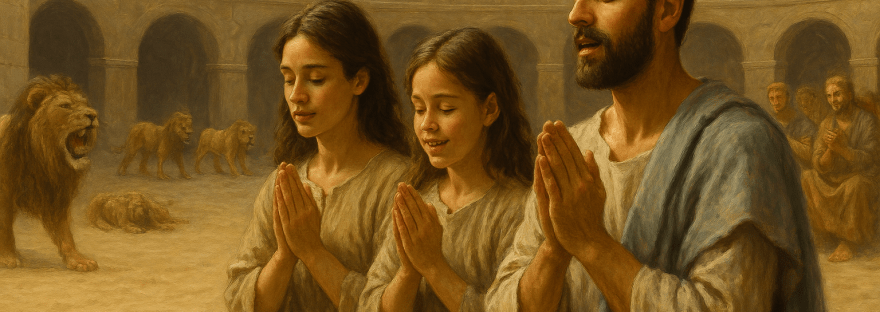
Life’s storms can shake our confidence—but they don’t shake God’s love. Persecution, suffering, even the threat of death cannot break the bond between Christ and His people. The Spirit reassures your heart: nothing separates you from the love of Christ.
The Ante-Nicene believers lived this truth. Many faced intense persecution. But they endured because they were empowered by the Spirit and anchored in Christ’s unshakable love.
Reflection: What hardship makes you question God’s nearness? Let His Word answer.
Prayer: Holy Spirit, settle my heart in Christ’s love. Let no fear, no pain, no pressure make me forget that nothing can separate me from Him. Amen.
“Who will separate us from the love of Christ? Will tribulation, or trouble, or persecution, or famine, or nakedness, or danger, or sword? Just as it is written: ‘For Your sake we are killed all day long; We were regarded as sheep to be slaughtered.’” — Romans 8:35–36 (NASB 1995)
Sometimes we go through hard things. Maybe we get hurt or feel scared. But nothing can stop Jesus from loving us.
The Holy Spirit helps you remember that even in trouble, Jesus is with you. He never leaves your side.
Try This: Draw a heart and write inside: “Nothing can stop Jesus from loving me.”
Prayer: Holy Spirit, thank You that Jesus always loves me. Help me remember that no matter what happens. Amen.











Leave a comment