📖 Scripture Focus:“And this is eternal life, that they may know You, the only true God, and Jesus Christ whom You have sent.” —John 17:3 (NKJV)Jesus made it clear: eternal life isn’t just about heaven. It begins now, in relationship with the Father through Christ. It’s personal, powerful, and life-altering. But sadly, many people—even those who attend church—don’t really know God.
Do you know about God—or do you know Him?
We inherit ideas about Him from culture, childhood, disappointment, or religion. But Jesus came to correct those misconceptions and reveal who the Father truly is.
He is holy. He is just. He is love. He is patient. He is powerful. And He is near.
To know God is to be changed by Him. Not just stirred emotionally, but shaped spiritually—by truth, by grace, and by the Spirit He gives us.
This journey begins with desire. Jesus wants you to know the Father—not in theory, but in fellowship.
Reflection Questions:
How would I describe my relationship with God right now?
Am I seeking to know Him more deeply, or am I settling for secondhand knowledge?
Prayer: Father, I want to know You—not just facts about You, but You. Reveal Yourself to me through Your Word, by Your Spirit, and in my daily walk. In Jesus’ name, amen.
Would you like me to continue with the Children’s Devotional next for Day 1?
📖 “And this is eternal life, that they may know You, the only true God, and Jesus Christ whom You have sent.” —John 17:3 (NKJV)
Do you know God?
Not just His name—but who He really is?
God made everything. He is strong, loving, kind, and always right. But here’s something special—He wants you to know Him like a best friend.
That’s why Jesus came. Jesus shows us what God is like. When we talk to Jesus, we’re learning about the Father too.
You don’t have to be a grown-up to know God. He loves to talk with children, just like you. You can read your Bible, pray, and ask Him questions. He’s always listening.
Knowing God isn’t just for Sundays. It’s for every day.
Think About It:
When do you feel closest to God?
What is something you want to learn about Him?
Prayer: Dear God, I want to know You. Help me understand who You are, and help me follow Jesus so I can know You better every day. Amen.
📖 “And this is eternal life, that they may know You, the only true God, and Jesus Christ whom You have sent.” —John 17:3 (NKJV)
Do you know God—or do you just believe He exists?
There’s a big difference.
Knowing about someone doesn’t mean you know them. You can know facts about your favorite actor, athlete, or influencer and still not have a relationship with them. It’s the same with God.
Jesus said eternal life isn’t just about going to heaven when you die. It’s about knowing God now. Deeply. Personally. Truthfully.
But here’s the hard truth: culture has created a version of “God” that’s vague and powerless. Even some churches have traded the Biblical Christ for a softer, safer version. That’s not who Jesus revealed.
To know God, you have to go to the Source—His Word. You have to let the Holy Spirit change how you see, think, and live. That’s how real faith becomes a real relationship.
Challenge: Where do you get most of your ideas about God—from social media, culture, or Scripture?
Prayer: God, I don’t want to settle for secondhand faith. I want to know You for real. Teach me who You are. Let my relationship with You be more than a label—make it life. Amen.
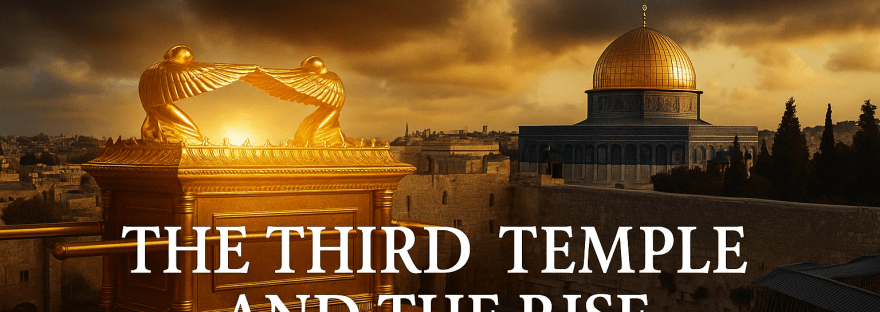
From the Series: The Ark of the Covenant as a Prophetic Game Changer
“Then he shall confirm a covenant with many for one week; but in the middle of the week he shall bring an end to sacrifice and offering. And on the wing of abominations shall be one who makes desolate.” — Daniel 9:27 (NKJV)
The Temple in Jerusalem has always been at the heart of God’s dealings with Israel. Twice destroyed in history, prophecy makes clear that a third temple will rise — and it will play a central role in the end times. If the Ark of the Covenant were rediscovered, it could provide the momentum for this long-awaited construction.
But this Temple will also become the stage for the greatest deception in human history — the rise of the Antichrist.
The Temple in Prophecy
The Scriptures speak plainly of a future temple:
Daniel 9:27 — Sacrifices and offerings restored, then halted.
Matthew 24:15 — Jesus warned of the “abomination of desolation” standing in the holy place.
2 Thessalonians 2:4 — The man of sin sits in the temple of God, proclaiming himself to be God.
Revelation 11:1–2 — John is told to measure the temple of God, a vision yet to be fulfilled.
This means a physical temple must exist in the last days.
The Ark as Catalyst
For religious Jews, the Ark is the most sacred link to God’s covenant. If uncovered and authenticated, its presence would:
Validate the call to rebuild.
Provide spiritual legitimacy for renewed sacrifices.
Unite Jewish zeal with national identity.
No discovery could accelerate Temple reconstruction more.
The Rise of Antichrist
The Temple becomes the platform for a deceptive world leader:
At first: He confirms a covenant of peace (Daniel 9:27). Israel feels secure.
At midpoint: He enters the temple and declares himself to be God (2 Thessalonians 2:4).
Through deception: He exploits sacred symbols to demand global worship (Revelation 13:4).
What began as a place of renewed hope becomes the focal point of blasphemy.
God’s Warning
Jeremiah warned Israel not to trust in “the temple of the Lord” as a false refuge (Jeremiah 7:4). The same warning applies to the end times. Trusting in relics or rituals without repentance will lead many into deception.
Only those who know Christ, the true Temple (John 2:19–21), will see clearly through the lies.
Reflection Questions
Why must a future Temple exist for prophecy to be fulfilled?
How could the Ark accelerate this movement?
What safeguards believers from being deceived by outward signs?
Closing Prayer
Lord, prepare us to discern truth in the midst of deception. Let our faith rest not in temples or symbols but in Christ, the true dwelling of God among us. Keep us steadfast until the day He returns. Amen.
The Man of Lawlessness (Antichrist) is a prophetic certainty (2 Thessalonians 2:3–4; Daniel 9:27; Matthew 24:15). The Ark of the Covenant is seen in heaven (Revelation 11:19).
However, the role of the earthly Ark in end-times prophecy is a matter of theory, not doctrine. Its rediscovery could align with prophecy (Temple rebuilding, Antichrist’s deception, global conflict), but Scripture does not require this for God’s plan to unfold.
We handle prophecy with reverence:
Certainties we hold tightly.
Theories we explore carefully.
Speculation we avoid.
Let Scripture remain our anchor as we watch and wait for Christ’s return.
Over the last 100 days, we’ve walked together through the powerful truths of Galatians 5–6, exploring the role of the Holy Spirit in every part of a believer’s life.
From the fruit He grows in us, to the strength He gives for spiritual battle, to the grace that carries us each day—this journey has revealed the Spirit’s presence as not just helpful, but essential.
We learned to walk, not just run. To sow to the Spirit, not the flesh. To boast in the cross, not ourselves. And to live, not by law, but by new creation life.
Whether you’ve been following the Women’s, Children’s, Teens’, or Family devotionals—or all of them together—each day was designed to ground you deeper in Christ and draw you nearer to the One who leads, comforts, convicts, and empowers.
Final Takeaway:
We are not alone. The Holy Spirit is not a concept. He is a Person—given to indwell, guide, and transform every follower of Christ.
Empowered believers live from a different source, for a different kingdom, and with a different goal: To know Christ. To walk in the Spirit. To glorify God.
💬 Reflection Questions:
What has the Holy Spirit revealed to you over the past 100 days?
Where have you seen growth? Conviction? Encouragement?
How will you continue walking with the Spirit—day by day?
Final Prayer:
Holy Spirit, thank You for being our Helper, our Teacher, and our Comforter. May we not just remember what we’ve read—but live what You’ve taught us. Let Your presence shape our daily lives. May we walk in grace, truth, and power—all for the glory of Jesus. Amen.
“The grace of our Lord Jesus Christ be with your spirit, brothers and sisters. Amen.” — Galatians 6:18 (NASB 1995)
After every strong word, every warning, every truth—Paul ends with grace.
Grace with your spirit. Not beside you. In you. Empowering you. Quietly working as the Holy Spirit continues His work.
We are not left to strive. We are not alone. The same grace that saved us now sustains us.
Reflection: Have I been walking in grace, or trying to do this in my own strength?
Prayer: Holy Spirit, thank You for the grace of Christ at work in me. May I never outgrow my need for it. Let Your grace be with my spirit daily. Amen.
From the series: Understanding the End Times — A Biblical Framework
“For the gifts and the calling of God are irrevocable.” — Romans 11:29 (NKJV)
Through this series, we’ve seen the building blocks of eschatology: why it matters, what the millennium is, how to read prophecy, the reality of apostasy, and the promises of Christ’s coming reign. We’ve also studied the rapture and God’s pattern of deliverance.
Now it’s time to bring it all together. Why does the Pre-Millennial, Pre-Tribulational view fit best with the full counsel of God’s Word?
A Consistent Hermeneutic
The Pre-Mill, Pre-Trib view uses a literal, grammatical-historical method from start to finish.
Israel means Israel — not the church.
A thousand years means a thousand years — not a vague period.
Christ’s return means Christ’s return — not symbolic language.
Other views often switch between literal and allegorical whenever convenient. But God’s Word is not double-minded. The same consistency that proves Christ’s first coming literal proves His second will be as well.
Harmony of Old and New Testaments
The prophets promised a future kingdom of peace, justice, and restoration:
“The Lord shall be King over all the earth.” (Zechariah 14:9)
“Nation shall not lift up sword against nation, neither shall they learn war anymore.” (Isaiah 2:4)
The New Testament never cancels these promises. In Acts 1:6, the disciples asked Jesus about restoring the kingdom to Israel. He did not deny the expectation, only the timing. Romans 11 assures us His covenant with Israel stands.
Pre-Mill, Pre-Trib preserves this harmony without forcing contradictions.
God’s Pattern of Deliverance
Throughout Scripture, God delivers His people before pouring out judgment:
Noah before the flood.
Lot before fire.
Israel before the plague of the firstborn.
This same pattern assures us that Christ will deliver His church before the outpouring of wrath in the Tribulation (1 Thessalonians 5:9).
The Doctrine of Imminence
The New Testament calls us to watch for Christ, not Antichrist. Titus 2:13 calls His return our “blessed hope.”
Only the Pre-Trib view preserves imminence. Mid- and Post-Trib views force us to wait for signs and judgments first. But the Bible tells us Christ could come at any moment.
Apostasy and Antichrist
2 Thessalonians 2:3 says the falling away comes first, then the man of sin is revealed. Apostasy is already here, preparing the way. After the rapture removes the true church, the stage will be set for Antichrist to rise.
This flow makes sense only in the Pre-Mill, Pre-Trib framework:
Apostasy spreads.
The rapture removes the church.
Antichrist rises during the Tribulation.
Christ returns in glory.
The millennium begins.
Fruit Through History
Jesus said, “You will know them by their fruits.” (Matthew 7:16)
Early church Premillennialism (Chiliasm) produced holiness, urgency, and perseverance.
Greek-influenced Amillennialism produced complacency and hostility to Israel.
Postmillennialism produced missionary zeal, but collapsed after the world wars.
Pre-Mill, Pre-Trib continues to produce fruit: watchfulness, holiness, urgency for mission, and comfort in Christ’s promises.
Reflection
The Pre-Mill, Pre-Trib view is not about charts or systems. It’s about trusting God’s Word. It alone preserves consistency, covenant faithfulness, God’s deliverance pattern, the doctrine of imminence, and the prophetic flow from apostasy to Antichrist to Christ’s reign.
In short: it takes God at His Word — all of it.
Reflection Questions
How does a consistent literal hermeneutic protect against error in prophecy?
Why is God’s covenant faithfulness to Israel essential for our confidence in His promises?
What fruit have you seen produced by the hope of Christ’s imminent return?
Closing Prayer
Lord, thank You that Your Word is consistent, trustworthy, and true. Guard us from allegorizing away Your promises. Help us to see Your covenant faithfulness, to trust in Your deliverance, and to live in readiness for Christ’s imminent return. May our lives bear the fruit of hope, holiness, and urgency as we await His coming. In Jesus’ name, Amen.
“From now on let no one cause trouble for me, for I bear on my body the marks of Jesus.” — Galatians 6:17 (NASB 1995)
Paul wasn’t speaking metaphorically. He bore scars—real wounds from beatings, stonings, and persecutions for following Jesus. His life was branded by loyalty to Christ.
The Spirit strengthens us to endure hardship for Jesus’ sake—not out of pride, but because we belong to Him.
You may not carry visible scars, but your life bears witness to the One who saved you. Let the world see the marks of grace, love, obedience, and endurance through the Spirit’s work in you.
Reflection: What marks of Jesus are visible in my life?
Prayer: Holy Spirit, shape me into someone who bears the image of Christ in all things. Let my life reflect His presence, no matter the cost. Amen.










Leave a comment