

Subscribe to continue reading
Subscribe to get access to the rest of this post and other subscriber-only content.

Subscribe to get access to the rest of this post and other subscriber-only content.
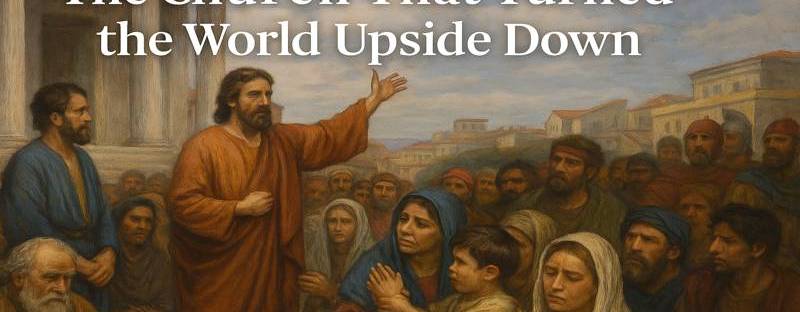
When the gospel began spreading across the Roman Empire, it didn’t come with military might, political clout, or institutional support. It came through fishermen, slaves, mothers, merchants, and martyrs—ordinary people who lived with such conviction that the world couldn’t ignore them.
In Acts 17:6, the accusation was made:
“These men who have turned the world upside down have come here also…”
This was not an exaggeration. The Kingdom of God was turning everything upside down—starting with the hearts of those who refused to live by the world’s values. And nowhere was this more evident than in the early Church.
They Preached Without Platforms
The first Christians had no church buildings, no mass communication, no social media, and no celebrity pastors. Yet the gospel spread like fire. Why? Because every believer saw themselves as a vessel of the Kingdom.
Evangelism wasn’t a program—it was a way of life. Wherever they went, they preached Christ—not only with words, but with love, generosity, and forgiveness.
“They are attacked by Jews as aliens and are persecuted by Greeks, yet those who hate them are unable to give any reason for their hatred.”
— Epistle to Diognetus, ch. 5
They Loved Without Limits
The Church’s growth wasn’t driven by theological arguments—it was fueled by radical love.
Their love had no worldly explanation, and that’s exactly what made it powerful.
“See how they love one another… and how they are ready to die for each other.”
— Tertullian, Apology 39
They Refused to Compromise
The early Christians didn’t adapt the gospel to gain favor with the world. They didn’t soften Jesus’ commands to make converts. They lived holy lives—separate from the systems of the world—and embraced the cost of faithfulness.
Whether it meant losing jobs, status, property, or life—they counted it joy to suffer for Christ. Their courage wasn’t rooted in pride but in eternal hope.
“You joyfully accepted the plundering of your property, since you knew that you yourselves had a better possession and an abiding one.”
— Hebrews 10:34
They Made Disciples, Not Just Converts
The goal wasn’t just to win arguments or gain numbers—it was to raise up citizens of the Kingdom who would live and die for Christ.
Discipleship happened in homes, in prison cells, and at gravesides. It was personal. It was sacrificial. And it changed the world.
What About Today?
If we want to turn the world upside down again, we must stop trying to fit in and start living like we truly belong to another Kingdom. Programs won’t change the world—but holy, Spirit-filled lives will.
We don’t need more influence—we need more obedience. We don’t need louder voices—we need brighter light.
What We Can Learn
Sources:
Subscribe to get access to the rest of this post and other subscriber-only content.

Subscribe to get access to the rest of this post and other subscriber-only content.

Subscribe to get access to the rest of this post and other subscriber-only content.
Subscribe to get access to the rest of this post and other subscriber-only content.

Jesus redefined greatness.
In a world where status meant power, and leadership meant rule, Jesus took a towel and washed His disciples’ feet. He looked into the eyes of ambitious men who asked for thrones and said:
“Whoever wants to be great among you must be your servant, and whoever wants to be first must be your slave—just as the Son of Man did not come to be served, but to serve.”
— Matthew 20:26–28
This wasn’t poetic humility—it was the foundation of Kingdom leadership. And the early Christians believed Him. They modeled greatness not by exalting themselves, but by lowering themselves in love and service.
They Didn’t Seek Titles—They Took Up Towels
The Ante-Nicene Christians rejected the pursuit of status in both the church and society. Leaders were identified by their character, not their charisma. The goal was not to climb spiritual ranks but to imitate the humility of Christ.
Many refused to accept leadership roles unless asked repeatedly and recognized by the community. Their leadership looked like:
They didn’t call themselves “Great”—the world called them fools, and Christ called them blessed.
Greatness Meant Becoming the Least
“The greatest among you will be your servant.”
— Matthew 23:11
Early Christian writings repeatedly point to service as the truest form of authority. Bishops and elders weren’t figures of dominance—they were examples in suffering and sacrifice.
“Do not think of yourself more highly than you ought… but consider yourself the servant of all.”
— Didache, ch. 3
When leaders began taking on titles, dressing differently, or distancing themselves from the flock, the Church began to drift from Christ’s model. But for nearly three centuries, the least were the greatest—and the cross, not the pulpit, was the symbol of leadership.
The Least Were Often Women, Children, and Slaves
In the Kingdom, value is not determined by age, gender, or position. The early church honored the faithful witness of widows, the courage of young martyrs, and the devotion of unnamed servants. Unlike the world, they didn’t build platforms—they lifted up the overlooked.
“God chose what is weak in the world to shame the strong.”
— 1 Corinthians 1:27
True greatness was seen in quiet obedience, faithful endurance, and unwavering love for enemies and strangers.
What About Today?
Modern leadership often mimics the world: recognition, influence, applause. Even in the church, success is measured in numbers, status, and public presence. But Jesus still whispers:
“The last will be first, and the first last.”
— Matthew 19:30
The way up is down. The way forward is on our knees. The way to lead is to serve.
What We Can Learn
Sources:

“Rejoice and be glad, for your reward in heaven is great; for in the same way they persecuted the prophets who were before you.”
— Matthew 5:12 NASB1995
💎 Joy in the Fire
Persecution isn’t the end of the story—it’s part of the blessing. Jesus doesn’t just tell us to endure it; He tells us to rejoice. Why? Because it means we’re walking the same road as the prophets—and because our reward isn’t here. It’s in heaven. And it’s great.
This joy isn’t fake or forced. It’s rooted in hope. The world may reject you, but heaven celebrates you.
🕯 Ante-Nicene Reflection
The early church faced suffering with joy. Many sang on the way to martyrdom. Their joy wasn’t in their pain—it was in the presence of Christ, the glory to come, and the honor of being counted worthy to suffer for His name.
💭 Reflect
🙏 Prayer
Father, help me rejoice when I’m rejected for following You. Let my eyes be on eternity and my heart anchored in the joy of knowing You. May my life echo the faith of those who came before me. Amen.
“Rejoice and be glad, for your reward in heaven is great; for in the same way they persecuted the prophets who were before you.”
— Matthew 5:12 NASB1995
🎉 When It’s Hard, Smile Anyway
Jesus says that when people are mean to us because we love Him, we can still be happy! Why? Because our reward is coming—and it’s way better than anything this world can give.
You are not the first person to be hurt for doing what’s right. God’s people have always faced hard things. But He never leaves them—and He promises a BIG reward in heaven!
🏛 Long Ago…
Children in the early church were taught to rejoice when others were unkind because they followed Jesus. They knew this life was short and heaven was forever.
💡 Think About It:
🙏 Let’s Pray:
Jesus, help me to rejoice when things are hard. Remind me that You are with me and that my reward is in heaven. Thank You for loving me. Amen.

“Rejoice and be glad, for your reward in heaven is great; for in the same way they persecuted the prophets who were before you.”
— Matthew 5:12 NASB1995
🎈 A Family That Rejoices in Trials
Jesus ends this section with a powerful call: Rejoice and be glad. Not because pain feels good, but because we are sharing in something eternal. The world’s rejection is heaven’s affirmation.
When your family faces hardship for your faith—at school, online, in conversations—remind your children: we’re not alone. The prophets were here before us. The early church endured this. And Jesus promises: your reward is great.
🕯 A Mother’s Role
Lead in joy. Even in hardship. Let your words, songs, and prayers point to the eternal. Your joy in trials will teach your children that Kingdom citizenship is worth every cost.
📖 Talk About It:
🧰 Kingdom Practice
Write down a list of “joy anchors”—truths that help your family rejoice during difficult times. Post it somewhere visible as a reminder.
✍️ Prayer
Lord, teach our home to rejoice even when it’s hard. May we never forget that our reward is in heaven. Let joy rise in our hearts because we belong to You. Amen.

Leave a comment