Devotions, Women's Devotionals

🌿 Kingdom Living Devotional — Day 71

“A good tree cannot produce bad fruit, nor can a bad tree produce good fruit.”

Matthew 7:18 NASB1995

🌳 Fruit Reveals the Root

Jesus speaks plainly: fruit matches the tree. You can’t fake godliness forever. Eventually, what’s growing in the heart will show. Words, attitudes, reactions—they all sprout from what’s rooted inside.

Our lives preach louder than our lips. Are we planted in Christ? Then we will grow in holiness, not perfection—but direction.

🕊 Ante-Nicene Insight:

The early believers knew their witness was seen in action. Their fruit—courage, compassion, endurance—proved their faith was genuine.

💭 Reflect:

  • What kind of fruit is growing in my life?
  • Am I rooted in Jesus or in something else?

✨ Prayer:

Lord, plant me deep in You. Let Your Spirit produce fruit that glorifies You. Amen.


Children's Devotionals, Devotions

🧒 Kids Devotional — Day 71

“A good tree gives good fruit. A bad tree gives bad fruit.”

Matthew 7:18 (Paraphrased)

🍎 Fruit from the Heart

Jesus says we’re like trees. If our hearts are good, we’ll do good things! But if we’re mean or selfish, that shows something is wrong inside.

🌱 Kingdom Tip:

Ask Jesus to help your heart stay soft and full of love. That’s how you grow good fruit!

💬 Think About It:

  • What kind of “fruit” did you show today?
  • Did it help or hurt others?

✨ Let’s Pray:

Jesus, help my heart be like a good tree. I want to grow love, kindness, and truth. Amen.

Devotions, Teen Devotions

😎 Kingdom Teen Devotional — Day 71

“A good tree cannot produce bad fruit…”

Matthew 7:18 NASB1995

🌿 What’s Coming Out of You?

Jesus says your life is proof of your source. You can’t live fake forever. Good trees grow good fruit. Bad trees grow drama, lies, selfishness.

Want to know if you’re growing right? Check your reactions, relationships, and choices. Is Christ showing up in them?

🔎 Real Talk:

  • Is your fruit matching your faith?
  • Where do you need to let God prune or replant?

🙏 Prayer:

God, show me what needs to change. Make me a tree that bears real fruit—not just words. Amen.

Devotions, Family Devotionals

🏡 Kingdom Family Devotional — Day 71

“A good tree cannot produce bad fruit…”

Matthew 7:18 NASB1995

🌾 Rooting Our Children in Christ

As mothers, we know we can’t force fruit—but we can nourish the root. The condition of the heart shapes the outcome of life. Jesus reminds us that good fruit only comes from a good tree.

Help your children see that faith is more than words; it’s shown in the fruit of their daily lives—respect, love, truthfulness. Model a life rooted in Scripture, and they’ll learn what grows from abiding in Christ.

🗣 Family Conversation:

  • What kind of fruit does our home produce?
  • Are there areas we need to replant or prune?

👣 Kingdom Practice:

Pick one fruit of the Spirit to focus on as a family this week. Encourage each other to grow it through words and actions.

🙏 Prayer:

Lord, help our family stay rooted in You. May the fruit of our lives bring You glory. Amen.

Biblical Interpretation, Editor's Picks, Kingdom Discipleship

How to Read the Bible — Returning to the Way of the Bereans and the Ante-Nicene Church

How to Read the Bible Series

You hold the Bible in your hands.
Sixty-six books. One Author. One Spirit. One unfolding story of redemption. And yet, for many, it’s a confusing book—wrapped in mystery, buried under layers of tradition, or filtered through man-made systems. But that was never God’s design.

The earliest Christians didn’t read the Bible through denominational creeds or theological filters. They read it with open hearts, under the teaching of the Holy Spirit, and in the context of their Jewish and first-century world. They tested everything by the written Word—and followed it with their lives.

It’s time to return to their way.


Scripture Focus:

“Your word is a lamp to my feet and a light to my path.”
Psalm 119:105, NASB1995


Reading with the Author, Not Just About Him

The Bible is not a dead text. It is living and active (Hebrews 4:12) because it is breathed out by the Holy Spirit (2 Timothy 3:16). Without the Spirit, Scripture becomes information. With Him, it becomes transformation.

The Bereans didn’t rely on theological systems or traditions to interpret the Word. They relied on the Spirit and the Scriptures themselves. Their example calls us to read with reverence, discernment, and dependence—not on man, but on God.


The Early Church Read the Word as One Unified Story

They saw the Old and New Testaments not as opposites but as one unfolding plan of God. They understood the Jewish idioms and culture behind the text. They read the Word in its historical context, through Hebraic lenses, and with spiritual hunger.

They didn’t force Scripture to fit their beliefs. They submitted their beliefs to the Word.


Principles for Spirit-Led, Scripture-Faithful Reading

  1. Context Is King
    Who wrote it? To whom? What is happening? What covenant are they under? Read what’s there, not what tradition has imposed.
  2. Culture and Language Matter
    Jesus spoke as a Jew to Jews. Many truths are deeply rooted in Hebrew idioms and first-century thought. Misreading the cultural setting leads to misapplying truth.
  3. Scripture Interprets Scripture
    Isaiah 28:10 and 1 Corinthians 2:13 remind us: truth is confirmed in multiple witnesses across God’s Word. Don’t hang doctrines on isolated verses.
  4. Avoid Allegory Unless the Text Demands It
    The early Church read Scripture literally unless it clearly indicated symbolism (such as in visions or parables). They let the Spirit—not philosophy—determine meaning.
  5. Reject Traditions That Override Scripture
    Jesus warned about this (Matthew 15:9). When tradition silences the Word or redefines its meaning, we must return to the text and the Spirit.

Walking as the Early Church Walked

To read the Bible rightly, we must return to how it was written: in context, by the Spirit, and for the Church. The Bereans searched the Scriptures daily to test everything. The Ante-Nicene believers treasured the Word, often at the cost of their lives.

They didn’t read to affirm a system. They read to know and follow Christ.


Return to the Word. Return to the Spirit.

The Bible is not meant to be interpreted by the wisdom of men, but by the One who wrote it. The Holy Spirit still teaches, still convicts, still opens eyes. You don’t need a new method—you need the old path.

Read with prayer. Read with surrender. Read with the Spirit. And you will find Christ in every page.

2–3 minutes

Leave a comment

Kingdom Discipleship, Love In Action

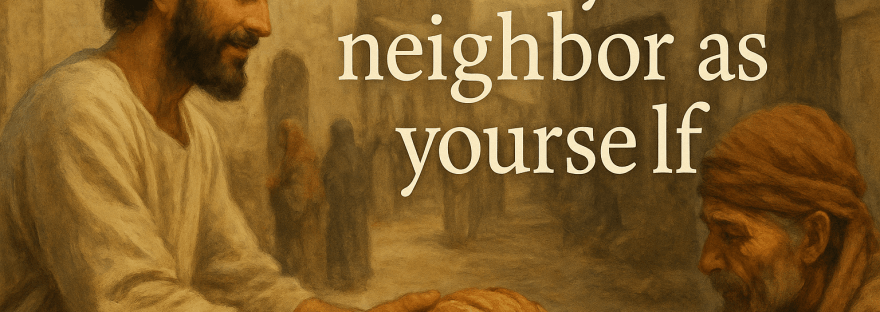
Love Your Neighbor as Yourself

From the series “The Commands of Christ — Love in Action”

“You shall love your neighbor as yourself.”
Matthew 22:39, NASB 1995

This is not a peripheral command—it is the second greatest, according to Christ Himself. Everything written in the Law and the Prophets hangs on it. And yet it may be the most quoted, least obeyed words in the Church today.

Loving your neighbor is not a theory. It is not a metaphor. It is a command.

Not to admire others from afar.
Not to tolerate them from behind a smile.
But to love them—genuinely, practically, sacrificially.

“On these two commandments depend the whole Law and the Prophets.”
Matthew 22:40

The first command is to love God with all your heart. The second is the evidence that the first is true.


We cannot love God and hate people.
We cannot worship Christ and despise His image-bearers.
We cannot call ourselves faithful disciples while walking past the wounded, the poor, the lonely, or the inconvenient.

The command to love our neighbor is not based on their worthiness, but on God’s worthiness—on what He has done in us and what He now wants to do through us.


“For the entire Law is fulfilled in one word, in the statement: ‘You shall love your neighbor as yourself.’”
Galatians 5:14

This is love that walks across the street.
Love that listens when it would rather speak.
Love that gives when no one is watching.
Love that welcomes the stranger, feeds the hungry, prays for the broken, and seeks peace when offended.


The early Church did not love in theory. They loved in deed and truth.

The Epistle to Diognetus (2nd century):
“They share their table with all, but not their bed. They love all men, and are persecuted by all. They repay hatred with kindness… and do good to those who harm them.”
Chapter 5–6

Clement of Rome (c. AD 96):
“Let us be kind to one another according to the compassion and gentleness of Christ… let the strong care for the weak, and the rich provide for the poor, without boasting.”
1 Clement, Ch. 38

Their faith was visible. Their love was active. And their neighbors knew it.


Loving your neighbor means loving the people God has placed near you.
Not just your friends.
Not just the ones who think like you.
But the ones who inconvenience you.
The ones who have nothing to give you in return.
The ones who test your patience, hurt your pride, or sit in silence right next to you.

And yes, it includes the stranger.
Because you were once a stranger to God.
And He welcomed you.


Love your neighbor.
Not with mere sentiment, but with sacrificial mercy.
Not for recognition, but for Christ’s glory.
Not only in the easy moments, but especially in the hard ones.

This is the love that fulfills the Law.
This is the love that reflects our King.


📚 Sources & References

Love Your Neighbor as Yourself

Scripture (NASB 1995):

  • Matthew 22:39–40 – “You shall love your neighbor as yourself…”
  • Galatians 5:14 – “The whole Law is fulfilled in one word…”

Ante-Nicene Sources:

  • The Epistle to Diognetus, Chapters 5–6.
    “They love all men, and are persecuted by all… repay hatred with kindness.”
    [Available at: EarlyChristianWritings.com/diognetus.html]
  • Clement of Rome, 1 Clement, Chapter 38.
    “Let us be kind… let the strong care for the weak…”
    [Available at: NewAdvent.org/fathers/1010.htm]
2–4 minutes

Leave a comment

Editor's Picks, Kingdom Discipleship, Love In Action

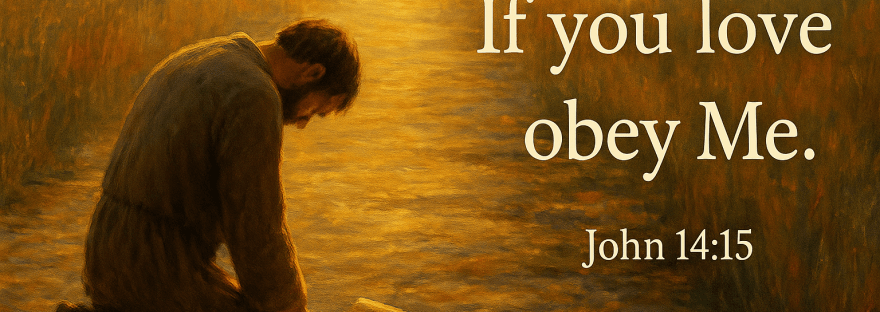
If You Love Me, Obey Me

From the series “The Commands of Christ — Love in Action”

The love of God is not a feeling we carry. It is a life we surrender.
It does not ask for admiration. It calls for obedience.
Love that does not obey is not love at all.

“If you love Me, you will keep My commandments.”
John 14:15, NASB 1995

Jesus didn’t say this to burden His disciples.
He said it to anchor them.
Because love for Christ is not measured in passion, eloquence, or emotion—but in faithfulness.

To follow Jesus is not to admire His teachings.
It is to obey His voice.


There is a kind of faith that applauds Christ from a distance.
There is a kind of love that sings on Sunday and wanders on Monday.
But the love that saves—the love born of the Spirit—is a love that listens, follows, repents, and obeys.

“Why do you call Me, ‘Lord, Lord,’ and do not do what I say?”
Luke 6:46

This is the question that echoes through every age of the Church.
Not, “Do you feel love for Me?”
But, “Will you do what I say?”


Jesus’ commands are not suggestions. They are not optional for the mature or the zealous. They are for every disciple who has been born of the Spirit and adopted into the family of God.

“For this is the love of God, that we keep His commandments; and His commandments are not burdensome.”
1 John 5:3

True love doesn’t argue with the Word.
It doesn’t try to explain away obedience with theology.
It bows. It follows. It trusts.


The early Church understood this well. Their love was visible, not because they claimed it, but because they lived it.

The Didache (c. AD 50–100):
“There are two ways: one of life, one of death. This is the way of life: First, you shall love God who made you; second, your neighbor as yourself. And whatsoever you would not have done to you, do not do to another… walk according to the commandments.”
Didache, Ch. 1–2

Irenaeus (c. 180 AD):
“Those who love Him walk in His commandments. For love does not destroy the Law, but fulfills it through obedience.”
Against Heresies, Book IV

These early believers did not separate doctrine from practice.
They didn’t ask how little they could obey and still be saved.
They asked how deeply they could obey to show their love.


So what does this mean for us?

It means love cannot remain vague.
It must be expressed in action—in forgiving, in speaking truth, in denying self, in remaining faithful, in keeping His words even when it costs us everything.

It means discipleship isn’t just about knowing what Jesus said—it’s about doing it.

“But the one who has listened and has not acted accordingly is like a man who built a house on the ground without a foundation…”
Luke 6:49

And it means this: the clearest evidence that the love of God abides in us… is that we obey.


📚 Sources & References

If You Love Me, Obey Me

Scripture (NASB 1995):

  • John 14:15 – “If you love Me, you will keep My commandments.”
  • 1 John 5:3 – “This is the love of God, that we keep His commandments…”
  • Luke 6:46–49 – “Why do you call Me, ‘Lord, Lord’ and do not do what I say?”

Ante-Nicene Sources:

  • The Didache, Chapters 1–2.
    “There are two ways… walk according to the commandments.”
    [Available at: EarlyChristianWritings.com]
  • Irenaeus, Against Heresies, Book IV.
    “Love does not destroy the Law, but fulfills it through obedience.”
    [Available at: NewAdvent.org]
2–4 minutes

Leave a comment

God Is Love, Kingdom Discipleship

Love That Lasts: Faithful Now, Fulfilled Forever

From the series “The Love of God”

The love of God is not seasonal.
It does not fade with age or change with circumstance.
It is not bound by time.
It is the love that calls, keeps, and crowns.

“Having loved His own who were in the world, He loved them to the end.”
John 13:1b, NASB 1995

This is the love we’ve traced through Scripture.
It is the love that shaped creation, bled at the cross, rose in victory, abides in us, and compels us to love others.

But this love does not end in the present.
It points us forward—to the day when we will see Him face to face.


“Now we see in a mirror dimly, but then face to face… Now abide faith, hope, and love, these three; but the greatest of these is love.”
1 Corinthians 13:12–13

All other gifts will cease. Prophecy, knowledge, tongues—they will vanish. But love will remain. Because love is not simply a trait of God—it is our eternal inheritance in Him.

We have been called not only to believe, but to become.
To be conformed to the image of Christ.
To walk as He walked.
To love as He loved.

And one day, that love will be made perfect.


“We know that when He appears, we will be like Him, because we will see Him just as He is.”
1 John 3:2

This is not a vague future. It is a glorious fulfillment—the marriage supper of the Lamb, the final union of Bride and Bridegroom, when God will dwell with His people and wipe away every tear (Revelation 21:3–4).

There will be no more betrayal.
No more suffering.
No more sin.
Only love—pure, unbroken, eternal.


The Shepherd of Hermas (c. 2nd century):
“Put on love, which is the bond of the elect of God. Those who walk in love shall dwell with Him forever.”
Mandate VIII

Irenaeus (c. 180 AD):
“Those who love the truth shall see the glory of God… and be made one with Him in eternal life.”
Against Heresies, Book IV

The early Church lived with this hope in view.
They suffered, sacrificed, and served—not to gain God’s love, but because they were certain of it. And they longed for the day when that love would be fully revealed.


So now we live between the times—anchored in the love that saved us, abiding in the love that sanctifies us, and reaching for the day when that love will be fully seen and shared forever.

This is the love that fuels obedience.
This is the love that drives mission.
This is the love that endures loss, rejection, hardship, and death.

And this is the love that awaits us with arms open wide.


“See how great a love the Father has given us, that we would be called children of God; and in fact we are.”
1 John 3:1

So walk in love—
Proclaim the truth—
Endure in holiness—
Raise the next generation—
Live sent in the Spirit—
And set your eyes on the One who first loved you.

Because the greatest is love.
And the end of the story is the eternal love of God—face to face, never ending.


📚 Sources & References

Love That Lasts: Faithful Now, Fulfilled Forever

Scripture (NASB 1995):

  • John 13:1 – “He loved them to the end.”
  • 1 Corinthians 13:12–13 – “Now abide faith, hope, love… the greatest of these is love.”
  • 1 John 3:1–2 – “We shall be like Him…”
  • Revelation 21:3–4 – “Behold, the dwelling place of God is among men…”

Ante-Nicene Sources:

  • The Shepherd of Hermas, Mandate VIII.
    “Put on love… those who walk in love shall dwell with Him forever.”
    [Available at: EarlyChristianWritings.com]
  • Irenaeus, Against Heresies, Book IV.
    “Those who love the truth shall see the glory of God…”
    [Available at: NewAdvent.org/fathers/0103.htm]
3–4 minutes

Leave a comment

God Is Love, Kingdom Discipleship

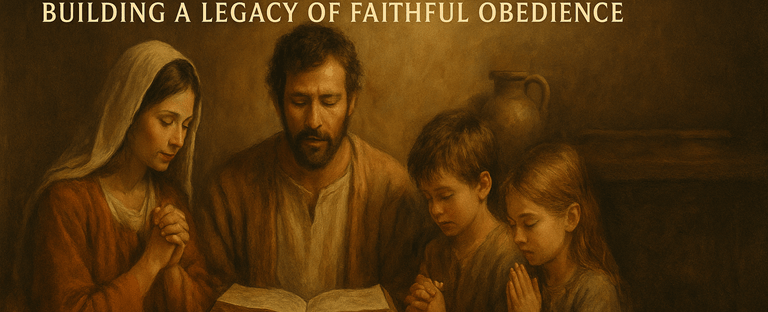
Love That Disciples: Building a Legacy of Faithful Obedience

From the series “The Love of God”

The love of God does not stop with one generation.
It is not a momentary encounter or an isolated spark.
It is a fire that’s meant to spread—house to house, heart to heart, generation to generation.

God’s covenant love always envisioned a family-shaped faith—one where His Word was not confined to the synagogue, but written on the doorposts of homes and the hearts of children.

“You shall love the Lord your God with all your heart… These words… shall be on your heart. You shall teach them diligently to your sons and shall speak of them when you sit in your house, when you walk on the road, when you lie down, and when you rise up.”
Deuteronomy 6:5–7

This is the rhythm of love passed down.
Not a Sunday ritual, but an all-day life.
Not a moment of emotion, but a movement of obedience.


Love that is real cannot be contained—it trains, instructs, corrects, and encourages. It sets boundaries and teaches mercy. It points to Christ not just with lips, but with living witness.

“We loved you so much that we were delighted to share with you not only the gospel of God but our own lives as well, because you had become dear to us.”
1 Thessalonians 2:8

The early Church understood this.
They did not build youth ministries.
They built households of faith.
They did not outsource discipleship.
They embraced it as the calling of every father, mother, brother, and sister in Christ.


The Apostolic Constitutions (c. 3rd–4th century):
“Let the home be the little church… where the father teaches, the mother prays, and the children grow in the fear of the Lord.”
Book VI, Ch. 2

Clement of Alexandria (c. 195 AD):
“The true Christian family is a school of righteousness. The father is the shepherd, the mother the helper, and the children are trained not with threats but in the love and fear of God.”
Paedagogus, Book III

They saw the home as the battlefield and the sanctuary.
And their children were not left to culture’s voice—they were raised in the words and ways of the King.


If the love of God has reached us, it must move through us.
We do not simply receive. We entrust.

“The things which you have heard from me… entrust these to faithful people who will be able to teach others also.”
2 Timothy 2:2

Love that disciples does not hoard truth.
It hands it down.
It guards the gospel, not by hiding it, but by planting it in others who will carry it forward.


We are not called to simply raise children.
We are called to raise disciples—those who will know the love of God, obey His voice, and make Him known long after we are gone.

This is the love that multiplies.
This is the love that endures.

And it is the only kind that leaves a legacy worth leaving.


📚 Sources & References — Part 10

Love That Disciples: Building a Legacy of Faithful Obedience

Scripture (NASB 1995):

  • Deuteronomy 6:5–7 – “Teach them diligently to your children…”
  • 1 Thessalonians 2:8 – “We were delighted to share not only the gospel, but our own lives…”
  • 2 Timothy 2:2 – “Entrust these to faithful people…”

Ante-Nicene Sources:

  • Apostolic Constitutions, Book VI, Ch. 2.
    “Let the home be the little church…”
    [Available at: NewAdvent.org or EarlyChristianWritings.com]
  • Clement of Alexandria, Paedagogus, Book III.
    “The true Christian family is a school of righteousness…”
    [Available at: CCEL.org]
2–4 minutes

Leave a comment

God Is Love, Kingdom Discipleship

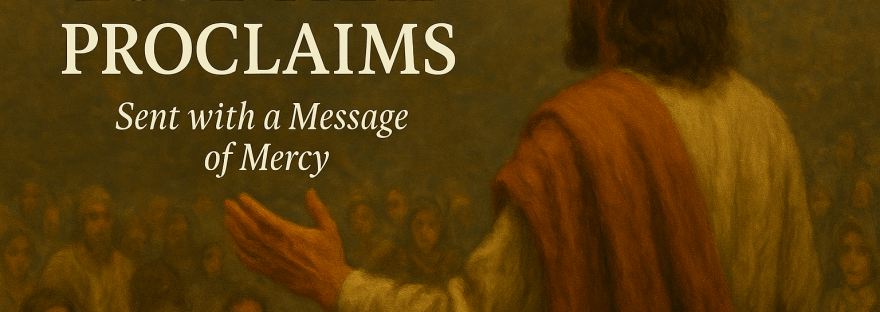
Love That Proclaims: Sent with a Message of Mercy

From the series “The Love of God: Revealed, Received, and Radiated”

The love of God does not remain silent. It speaks.
It declares. It invites. It warns.
Love that sees destruction approaching and says nothing is not love at all.

From Genesis to Revelation, God reveals His love not only through actions but through proclamation. His love is not vague or hidden—it is revealed in His Word, and His people are called to carry that Word to the ends of the earth.

“For the love of Christ controls us… He died for all, so that those who live would no longer live for themselves, but for Him who died and rose on their behalf.”
2 Corinthians 5:14–15

The Church is not simply a shelter from the world. It is a messenger to it.
Those who have received God’s mercy are commanded to go—not in arrogance, but in the humility and boldness that come from grace.


“We are ambassadors for Christ, as though God were making an appeal through us; we beg you on behalf of Christ, be reconciled to God.”
2 Corinthians 5:20

The Apostle Paul didn’t speak as a professional orator. He pleaded as one who had encountered the love of God and could not stay silent.

Love proclaims not because it wants to win arguments, but because it longs to save souls.

A gospel that stays indoors, behind church walls and beneath polished lives, has forgotten the One who left heaven to come find us. Jesus was not ashamed to speak of the Kingdom. He went to villages, synagogues, hillsides, and homes. He taught in the open. He rebuked in love. He invited the weary. He confronted the religious. He never compromised—but He always proclaimed.


The early Church inherited that same commission.

They weren’t trying to build a brand. They were sent to carry a message—one that would get many of them killed. And still, they spoke.

Justin Martyr (AD 100–165):
“For our part, we speak not to win favor or to escape hatred, but to testify to the truth we have received… for love compels us to warn even those who hate us.”
First Apology, Ch. 17

The Roman Empire didn’t tolerate such messages.
But the Christians didn’t soften them. They spoke of repentance. They warned of judgment. They proclaimed the mercy of God through the cross of Christ. And they did it with tears, not just arguments.

Origen (AD 185–254):
“When we go forth to proclaim Christ, we do not go as those who condemn, but as those who plead. We speak of love, that they may be saved.”
Contra Celsum, Book III


If we have truly received the love of God, we will not remain silent about it.

We will speak with urgency, because time is short.
We will speak with compassion, because we were once lost.
We will speak with courage, because Christ is worth it.
We will speak with clarity, because love is not vague.

“Preach the word; be ready in season and out of season; correct, rebuke, and encourage with great patience and instruction.”
2 Timothy 4:2


Proclamation is not reserved for pastors or missionaries.
It is the calling of every redeemed saint.
Whether around the dinner table, in the break room, on the phone, or in the marketplace, the love of Christ compels us to speak.

“Let the redeemed of the Lord say so…”
Psalm 107:2

The early Church didn’t wait for pulpits.
They proclaimed Christ wherever they went—because the love they had received demanded a response.

We are not called to convince the world with cleverness.
We are called to proclaim Christ crucified—with humility, truth, and love.

This is the love that saved us.
It is also the love that sends us.


Sources & References

Love That Proclaims: Sent with a Message of Mercy

Scripture (NASB 1995):

  • 2 Corinthians 5:14–15, 20 – “The love of Christ controls us… we are ambassadors for Christ…”
  • 2 Timothy 4:2 – “Preach the word… rebuke, exhort with great patience…”
  • Psalm 107:2 – “Let the redeemed of the Lord say so…”

Ante-Nicene Sources:

  • Justin Martyr, First Apology, Ch. 17.
    “We speak not to win favor… but to testify to the truth… for love compels us.”
    [Available at: CCEL.org or EarlyChristianWritings.com]
  • Origen, Contra Celsum, Book III.
    “We do not go as those who condemn, but as those who plead…”
    [Available at: NewAdvent.org or EarlyChristianWritings.com]
3–5 minutes

Leave a comment