Devotions, Family Devotionals

🏡 Kingdom Family Devotional — Day 17

Subscribe to continue reading

Subscribe to get access to the rest of this post and other subscriber-only content.

Devotions, Women's Devotionals

🌿 Kingdom Living Devotional — Day 17

Subscribe to continue reading

Subscribe to get access to the rest of this post and other subscriber-only content.

First Fruits, Holy Days

Firstfruits — He Is Risen!

Scripture Focus: Leviticus 23:9–14; 1 Corinthians 15:20–23; Matthew 28; Romans 6:8–11


On April 20, 2025, the Feast of Firstfruits is celebrated on the day after the weekly Sabbath during Passover week. This appointed time marks the beginning of the barley harvest in Israel, when the first sheaf (omer) was brought before the LORD as an offering of thanksgiving and trust in God’s provision. Yet for those who belong to Christ, this feast takes on even deeper significance. It is the day that death was defeated. It is the day the tomb was found empty.

What Is Firstfruits?

In Leviticus 23, the LORD commanded:

“When you enter the land which I am going to give to you and reap its harvest, then you shall bring in the sheaf of the first fruits of your harvest to the priest… He shall wave the sheaf before the Lord for you to be accepted” (vv. 10–11).

This sheaf represented the very first yield of the harvest. Offering it was a declaration of faith: if God accepted the first, He would bless the rest. It was an act of consecration and trust.

Jesus, the Firstfruits of the Resurrection

Paul connects this feast directly to Christ:

“But now Christ has been raised from the dead, the first fruits of those who are asleep” (1 Corinthians 15:20).

Just as the priest would wave the sheaf of barley as a representative of the harvest to come, so Jesus was raised as the first of a new creation—a living guarantee that those who belong to Him will also rise.

“For since by a man came death, by a man also came the resurrection of the dead. For as in Adam all die, so also in Christ all will be made alive. But each in his own order: Christ the first fruits, after that those who are Christ’s at His coming” (vv. 21–23).

His resurrection wasn’t an isolated miracle—it was the down payment of a coming harvest. The tomb is empty, and because of that, ours will be too.

Raised to New Life

Firstfruits is not just about the future resurrection. It also proclaims newness of life now:

“Now if we have died with Christ, we believe that we shall also live with Him… Consider yourselves to be dead to sin, but alive to God in Christ Jesus” (Romans 6:8, 11).

Resurrection is not only our hope—it is our identity. The same power that raised Jesus from the grave now works in those who believe (Ephesians 1:19–20).

Celebrating with Barley: A Symbol of Consecration

To mark this day, many believers choose to incorporate barley into their celebration as a physical reminder of the spiritual harvest. Barley was the first crop to ripen in Israel and was seen as a humble offering from the land—one that God Himself chose as the symbol of resurrection.

Ideas for a Simple Firstfruits Celebration:

  • Barley Bread or Soup: Prepare a meal using barley and pray together, giving thanks for Christ, our Firstfruits.
  • Wave Sheaf Symbol: Create a small bundle of barley or another grain and wave it before the Lord as a declaration that your life is His.
  • Thanksgiving and Testimony: Reflect on how Christ has brought resurrection life into your home. Share testimonies of spiritual renewal.
  • New Commitments: As the sheaf was a symbol of consecration, use this day to rededicate your heart, family, or home to God’s purposes.

Counting the Omer: From Resurrection to Empowerment

Leviticus 23:15–16 gives this command:

“You shall also count for yourselves from the day after the Sabbath, from the day when you brought in the sheaf of the wave offering; there shall be seven complete Sabbaths. You shall count fifty days to the day after the seventh Sabbath; then you shall present a new grain offering to the Lord.”

This count begins on Firstfruits and continues for fifty days until Shavuot (Pentecost). It was a season of expectancy—a time of waiting for harvest, revelation, and empowerment.

In Acts 1–2, we see the ultimate fulfillment of this period. From the resurrection to the pouring out of the Holy Spirit at Pentecost, the disciples waited together in prayer and obedience. On the fiftieth day, the Spirit descended.

For us today, counting the omer is a way to remember that salvation is not the end—it is the beginning of sanctification and mission. Each day is a step of preparation to be used by the Lord.

Suggestions for Counting the Omer:

  • Read one Psalm each day or walk through the Book of Acts.
  • Journal how God is forming Christ in you during this season.
  • Focus on “bearing fruit” in the Spirit: love, joy, peace…

We do not count up to Pentecost in obligation but in anticipation—we await the fullness of what God intends to do through His resurrected and Spirit-filled people.

Devotional Reflection: Living as the Harvest of God

Read Together: Leviticus 23:9–14; 1 Corinthians 15:20–23; Romans 6:8–11

Discuss:

  • What did the offering of Firstfruits symbolize for Israel?
  • How is Jesus the fulfillment of this feast?
  • How does our future resurrection shape the way we live now?
  • What does it mean to be “alive to God”?

Reflect: Thank God for the risen Christ. Let His resurrection become more than a doctrine—let it become your daily joy, strength, and expectation. We are not merely waiting for resurrection; we are already walking in it.

Pray: Father, thank You for raising Jesus from the dead as the firstfruits of the resurrection to come. Thank You that in Him we are made alive—now and forever. Help us to live each day in the power of His resurrection, bearing fruit that glorifies You. In Jesus’ name, Amen.

He is risen—and so shall we be.

Note:

Orthodox Judaism follows the Pharisaic / Rabbinic Interpretation (Majority of Modern Judaism), not necessarily a literal reading of Leviticus 23.

  • “Sabbath” = the first day of Unleavened Bread (which is a “High Sabbath,” not necessarily Saturday)
  • Therefore, Firstfruits = Nisan 16, regardless of the weekday
  • In 2025, Unleavened Bread begins at sundown April 13 (Nisan 15), so Firstfruits (Nisan 16) = April 14 evening to April 15 evening

Messianic Jews and many Christians who celebrate the feasts follow the Sadducean/Temple-era practice, which aligns with Jesus rising on Sunday and Paul calling Him the “Firstfruits” (1 Corinthians 15:20–23).

  • “Sabbath” = the weekly Sabbath (Saturday)
  • Firstfruits = the Sunday after that Sabbath, always a Sunday resurrection picture
  • In 2025, the weekly Sabbath during Passover week is April 19, so Firstfruits = Sunday, April 20
4–7 minutes


Leave a comment

Kingdom Discipleship, Kingdom Living

The Role of Women and Children in the Kingdom

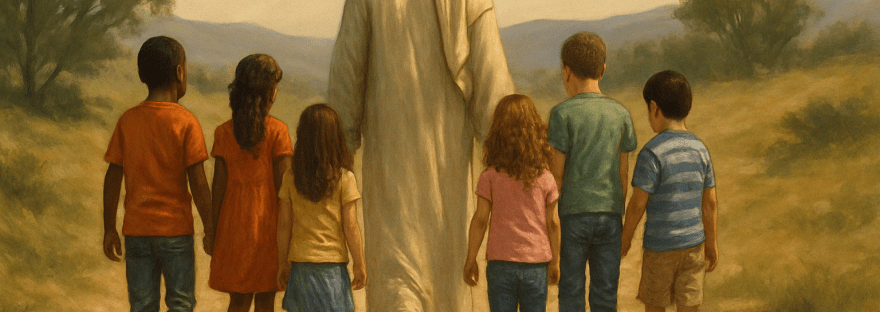
In a culture where women and children were often overlooked, dismissed, or used, the Kingdom of God broke every norm. Jesus didn’t just tolerate women and children—He honored them, taught them, touched them, healed them, included them, and commissioned them.

“Let the little children come to Me and do not hinder them, for to such belongs the Kingdom of Heaven.”
Matthew 19:14

“Truly I tell you, wherever the gospel is preached in the whole world, what she has done will also be told in memory of her.”
Mark 14:9

The early Church, following the example of Christ, created space for women and children to be seen, valued, and used by God. They weren’t peripheral to the Kingdom—they were essential to it.


Women in the Early Church

From the beginning, women played key roles in the spread of the gospel and the life of the Church:

  • Phoebe was a deacon and trusted courier of Paul’s letters (Romans 16:1–2).
  • Priscilla, alongside her husband Aquila, taught Apollos more accurately in the faith (Acts 18:26).
  • Mary, Junia, Tryphena, Tryphosa, and Persis were recognized as co-laborers (Romans 16).
  • Widows were entrusted with prayer, service, and teaching younger women (1 Timothy 5:5, Titus 2:3–5).
  • Many female martyrs, like Perpetua, Blandina, and Felicitas, faced death with courage that shocked their persecutors.

The early church fathers, even while bound by certain cultural norms, often honored these women’s faithfulness.

“The women of the Church are not silent in works, though they may be in gatherings; they teach by their examples.”
Tertullian, On the Veiling of Virgins


Children in the Kingdom

Unlike Roman culture that viewed children as disposable or property, Christians believed children were image-bearers of God with a right to life and dignity. They:

  • Rescued abandoned infants from exposure
  • Raised children in the teachings of Christ
  • Included them in the body of believers
  • Valued their prayers, worship, and spiritual gifts

The testimony of young martyrs like Agnes, Pancras, and many others showed that children were capable of great faith and spiritual maturity.

“Out of the mouth of infants and nursing babies You have ordained praise.”
Psalm 8:2


A Different Witness to the World

The early Church stood out in how they treated the least valued members of society. They didn’t marginalize the weak—they exalted them. In the Kingdom, greatness isn’t about power—it’s about purity, humility, and sacrificial love.

“Whoever humbles himself like this child is the greatest in the Kingdom of Heaven.”
Matthew 18:4


What We Can Learn

  1. The Kingdom lifts up those the world casts aside.
  2. Women and children are not spiritual spectators—they are Spirit-filled citizens.
  3. God uses the faith of the least likely to shame the strong.
  4. Churches today must embrace the fullness of the body—including every generation and gender.

Sources:

  • The Holy Bible — Matthew 18:4; Matthew 19:14; Mark 14:9; Romans 16; Acts 18:26; Psalm 8:2
  • Tertullian, On the Veiling of Virgins
  • The Passion of Saints Perpetua and Felicitas
  • The Martyrdom of Blandina, in Eusebius, Church History
  • Clement of Alexandria, The Instructor, Book 1

2–3 minutes

Leave a comment

Devotions, Women's Devotionals

🌿 Kingdom Living Devotional — Day 16

Subscribe to continue reading

Subscribe to get access to the rest of this post and other subscriber-only content.

Children's Devotionals, Devotions

🧒 Kingdom Kids Devotional — Day 16

Subscribe to continue reading

Subscribe to get access to the rest of this post and other subscriber-only content.

Devotions, Teen Devotions

😎 Kingdom Teen Devotional — Day 16

Subscribe to continue reading

Subscribe to get access to the rest of this post and other subscriber-only content.

Devotions, Family Devotionals

🏡 Kingdom Family Devotional — Day 16

Subscribe to continue reading

Subscribe to get access to the rest of this post and other subscriber-only content.

First Fruits, Holy Days

Messiah, the First Fruits: A Messianic Exposition and Devotional Journey

I. Scriptural Foundation — What Are First Fruits?

“Then the Lord spoke to Moses, saying, ‘Speak to the sons of Israel and say to them, “When you enter the land which I am going to give to you and reap its harvest, then you shall bring in the sheaf of the first fruits of your harvest to the priest. He shall wave the sheaf before the Lord for you to be accepted; on the day after the sabbath the priest shall wave it.”’
— Leviticus 23:9–11 (NASB 1995)

The Feast of First Fruits (Bikkurim) is one of the appointed times in Leviticus 23. It was celebrated on the day after the Sabbath following Passover—the first day of the week. As the barley harvest began, Israel was commanded to bring the first and best of their crop to the priest as a wave offering, consecrating the rest of the harvest to the LORD.


II. Understanding First Fruits in Jewish Thought

  1. Timing and Meaning

“Bikkurim” (בִּכּוּרִים) means first of the ripe fruits—a Hebrew idiom meaning what is most precious, set apart, and belonging to God.

First Fruits marked the beginning of the harvest season and launched the Counting of the Omer, a 50-day journey of anticipation leading to Shavuot (Pentecost).

  1. Cultural Insights

Farmers would tie a reed around the ripening sheaf and declare, “This is for the LORD.”

The “first” of anything—fruit, children, livestock—was not optional. In Jewish culture, it acknowledged that God owns everything, and we are simply stewards.

Jewish Idiom: “The first belongs to the King.” It was a way of honoring the covenant relationship with YHWH.


III. Fulfillment in Messiah — Jesus, the First Fruits

1 Corinthians 15:20–23 (NASB 1995)

“But now Christ has been raised from the dead, the first fruits of those who are asleep. For since by a man came death, by a man also came the resurrection of the dead. But each in his own order: Christ the first fruits, after that those who are Christ’s at His coming.”

Yeshua rose on the Feast of First Fruits, fulfilling this appointed time not only in timing but in meaning.

Messianic Fulfillment:

Jesus is the “First Fruits” of the resurrection—the first of the final harvest to be raised in glory.

Just as the first sheaf made the whole harvest holy, Messiah’s resurrection sanctifies the resurrection of all who belong to Him.

This also fulfills Psalm 16:10 — “You will not allow Your Holy One to undergo decay.”

Jewish Thought: “What begins in holiness continues in holiness.” The first fruits were a pledge of what’s to come.


IV. Key Themes and Jewish Idioms


V. Devotional Exercises — Living the First Fruits Life

Each of these is rooted in Scripture and can be practiced individually or with your family or small group.


  1. Gratitude Offering

Read: Deuteronomy 26:1–11
Do: Write down your “first fruits” in this season. What has God given you that you can give back—your time, talents, worship, resources?
Pray:

“Abba, everything I have comes from You. I offer You my first and best. Let my life be an offering, just as You gave me Your best in Yeshua.”


  1. Resurrection Reflection

Read: 1 Corinthians 15:12–28
Do: Journal what it means that Messiah is the first fruits of the resurrection. How does His resurrection shape your view of eternity?
Reflect:

“If He rose, so will I. My future is as secure as the empty tomb.”


  1. Counting the Omer — Spiritual Renewal

Read: Psalm 119:1–16
Do: Begin a 50-day Scripture journey from First Fruits to Pentecost. Each day, read a Psalm or passage, meditate, and record spiritual growth.
Blessing (adapted):

“Blessed are You, LORD our God, King of the universe, who sanctifies us in Messiah and teaches us by His Spirit.”


  1. Consecrate Your Harvest

Read: Romans 12:1–2
Do: Dedicate the areas of your life that need to be surrendered to the Lord—work, family, ministry, dreams. Offer them as a “wave offering.”
Pray:

“Yeshua, You are my First and Best. Teach me to live as a first fruits believer—holy, consecrated, and joyfully Yours.”


VI. Final Word — Messiah the First and the Guarantee

The first fruits were the pledge that more was coming. In Messiah’s resurrection, we have the guarantee that the full harvest of believers will one day rise. Until then, we live as consecrated ones—bearing fruit, growing in holiness, and anticipating the day of final redemption.

“But each in his own order: Messiah the First Fruits, then those who are Messiah’s at His coming.”
— 1 Corinthians 15:23


3–5 minutes

Leave a comment

Kingdom Discipleship, Kingdom Living

Counting the Cost — The Narrow Way of the Kingdom

Jesus never promised an easy road for those who follow Him. In fact, He said quite the opposite:

“Enter by the narrow gate… For the gate is narrow and the way is hard that leads to life, and those who find it are few.”
Matthew 7:13–14

The early Christians didn’t just understand this—they lived it. Their path was narrow. Their lives were hard. But they counted the cost, took up their crosses, and followed their King with joy.

They knew that Kingdom citizenship came with sacrifice, but they also knew it came with an eternal reward.


They Counted the Cost Before Following

Unlike modern altar calls that often emphasize blessing over burden, the early Church believed that following Christ meant dying to self. Jesus warned:

“Whoever does not bear his own cross and come after Me cannot be My disciple… any one of you who does not renounce all that he has cannot be My disciple.”
Luke 14:27, 33

This wasn’t theoretical. They risked their jobs, homes, families, and lives. And they followed anyway.


They Chose the Hard Road Over the Popular One

The world offered comfort, protection, and compromise. But these believers knew that the wide road leads to destruction. They chose:

  • Poverty over dishonesty
  • Imprisonment over idolatry
  • Martyrdom over military service
  • Rejection over reputation

They knew that obedience might cost them everything. And still, they rejoiced that they were counted worthy to suffer for Christ (Acts 5:41).


Discipleship Was a Lifelong Surrender

For them, faith wasn’t a moment—it was a movement of the heart toward lifelong obedience. Baptism marked the beginning of a radical new allegiance. They didn’t ask, “What’s the minimum I must give?” They asked, “How can I give all?”

“Let none of you turn deserter… let us serve God with a pure heart, and we shall be found righteous in the last day.”
2 Clement 11


What About Today?

The Church today often minimizes the cost to maximize attendance. But Christ never changed His standard. The gate is still narrow. The cross is still required. And true discipleship still demands total surrender.

To be a citizen of the Kingdom means to walk a road that the world will never understand—but one that leads to life eternal.


What We Can Learn

  1. Jesus calls us to count the cost—not just raise a hand.
  2. Discipleship means daily surrender and sacrifice.
  3. The narrow road is hard—but it leads to life.
  4. The reward far outweighs the suffering.

Sources:

  • The Holy Bible — Matthew 7:13–14; Luke 14:27, 33; Acts 5:41
  • 2 Clement, ch. 11
  • Tertullian, On Baptism
  • Hermas, Commandments and Similitudes

2–3 minutes

Leave a comment