“For the mind set on the flesh is death, but the mind set on the Spirit is life and peace.” — Romans 8:6, NASB1995
Peaceful Homes Begin with Peaceful Minds
Children watch how we handle pressure, not just what we say. Romans 8:6 reminds us that mindset determines peace.
When our minds are set on the Spirit—our home becomes a refuge, not a war zone. When we’re anxious, we teach our kids to take their worries to the Lord, not to their emotions.
Discussion Prompt: Ask your children:
What helps your mind feel peaceful?
How do we set our thoughts on God when we’re upset?
Prayer: Lord, train our minds to seek You first. Let our home reflect Your peace by the power of the Holy Spirit. Amen.
“For the mind set on the flesh is death, but the mind set on the Spirit is life and peace.” — Romans 8:6, NASB1995
Peace Begins in the Mind
Have you ever felt overwhelmed by your own thoughts? Worry. Fear. Doubt. Busyness.
Romans 8:6 reminds us there is a better way—a mind set on the Spirit. This isn’t passive thinking. It’s intentional. It’s redirecting your heart away from fleshly patterns and back toward the presence of God.
The result? Life and peace. Not artificial calm, but deep, Spirit-rooted rest.
Reflection: What thoughts dominate your mind? Are they aligned with the Spirit or the flesh?
Prayer: Holy Spirit, guard my thoughts today. Fix my mind on what is true, pure, and eternal. Give me Your peace. Amen.
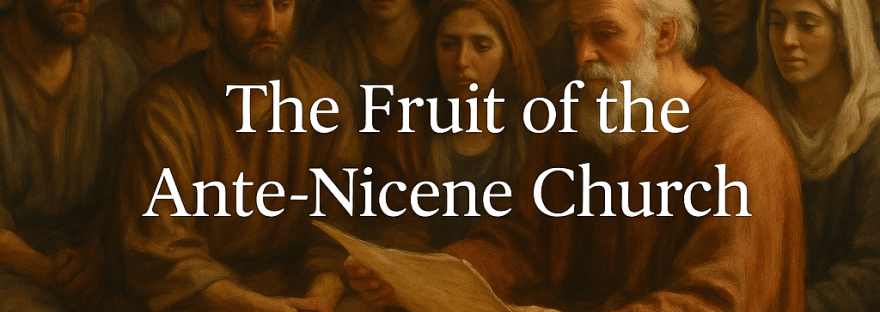
Most Christians today have never heard of the Solas—let alone the deeper truth behind them. They’ve been reduced to academic slogans in Reformed circles or historical trivia for Protestants. But these were once lived out—not just proclaimed—by the Ante-Nicene Church, the faithful believers between AD 33–325 who bore real Kingdom fruit.
While many know Sola Scriptura or Sola Fide, there’s one that has been tragically forgotten in both Protestant and Catholic traditions:
Solo Spiritu Sancto — By the Holy Spirit Alone
This is the root of all the others…
Sola Scriptura (Scripture Alone)
God’s Word is the ultimate authority for faith and life—not church tradition or human opinion. Everything we believe and do must align with Scripture.
Sola Fide (Faith Alone)
We are justified (made right with God) through faith alone—not by works, rituals, or religious performance. True saving faith trusts fully in Christ.
Sola Gratia (Grace Alone)
Salvation is a free gift of God’s grace. We did not earn it, and we cannot deserve it. It is all by His mercy and love.
Solo Spiritu Sancto (By the Holy Spirit Alone)
We understand and walk in truth by the power of the Holy Spirit—not by intellect, tradition, or man’s wisdom. The Spirit teaches, convicts, empowers, and leads God’s people.
Solus Christus (Christ Alone)
Jesus Christ is the only mediator between God and man. Our hope, forgiveness, and eternal life come through Him alone—not saints, priests, or systems.
Soli Deo Gloria (To the Glory of God Alone)
Everything—including our salvation—is for God’s glory. We live, serve, and worship not for applause or status, but to magnify His name.
Without the Holy Spirit teaching us Scripture (Sola Scriptura), our faith becomes academic. Without the Spirit convicting us toward faith (Sola Fide) and leading us in grace (Sola Gratia), it becomes a transaction. Without the Spirit glorifying Christ alone (Solus Christus) and stirring us to live for God’s glory (Soli Deo Gloria), it becomes religious performance.
Instead of growing deep in Him, we debate endlessly. We lop off branches of doctrinal disagreement, but never deal with the root: that we’ve traded the Spirit’s authority for men’s interpretations. The fruit of this tree? Division, pride, and confusion.
The Ante-Nicene Church shows us a better way: a Church anchored in the Spirit, interpreting Scripture together, walking in radical obedience, and bearing fruit worthy of Christ.
“But you will receive power when the Holy Spirit has come upon you; and you shall be My witnesses…” — Acts 1:8a, NASB1995
Power for Purpose
This isn’t about personality—it’s about power. Jesus didn’t send the Spirit so you could “feel spiritual.” He sent the Spirit to empower you to live boldly, witness faithfully, and endure joyfully.
We often forget that the same Spirit who hovered over the deep and raised Christ from the dead now dwells in us.
You don’t need to find the strength within. It’s already been given. So rise in that power—not self-reliance, but Spirit-dependence.
Reflection: What area of your life needs Spirit-empowered boldness today?
Prayer: Holy Spirit, fill me with Your power. Use me to be a faithful witness, not in might but in Your strength. Amen.
“But you will receive power when the Holy Spirit has come upon you; and you shall be My witnesses…” — Acts 1:8a, NASB1995
Power in the Home
The Spirit empowers parents too. Not just for tasks, but for testimony—how we handle pressure, speak in frustration, or walk in forgiveness.
Let your children see where your strength comes from. Don’t hide your weaknesses—invite them into your dependence on God. That’s how they learn to seek His power too.
Discussion Prompt: Ask your child:
What’s something hard you’ve faced recently?
How could the Holy Spirit give you strength for it?
Prayer: Holy Spirit, we need Your power. Strengthen us to live for Jesus and to show His love in our home. Amen.
“But you will receive power when the Holy Spirit has come upon you; and you shall be My witnesses…” — Acts 1:8a, NASB1995
God Gives You Power
When Jesus went back to heaven, He didn’t leave His friends alone. He sent the Holy Spirit to help them—and He helps you too!
The Holy Spirit gives you power to do what’s right, say kind words, and tell others about Jesus. You don’t have to be afraid or feel too small—because God is with you!
Try This: When you feel scared or unsure, whisper: “Holy Spirit, help me.” Watch how He gives you courage!
Prayer: Holy Spirit, thank You for giving me power to be brave and kind. Help me share Jesus with others. Amen.
Spirit-Led Foundations of the Early Church (AD 33–325)
A Journey Back to the Faith Once Delivered
“Thus says the Lord, ‘Stand by the ways and see and ask for the ancient paths, where the good way is, and walk in it; and you will find rest for your souls.’” — Jeremiah 6:16, NASB1995
We live in a time when the foundations of our faith are being redefined—not always by secular forces, but often from within the Church. Doctrines are dissected. Theological systems debated. Denominations defended. And yet, many believers are still left feeling disconnected from the power, purity, and simplicity of the early Church.
This blog series is not an invitation to theological alignment. It’s an invitation to spiritual awakening.
We’re going to journey through the Six Solas—but not as they were recited during the Reformation. We’ll explore them as they were lived and embodied by the men and women of the Ante-Nicene Church, who held fast to the faith from Pentecost to persecution—long before councils, creeds, or clerical systems took over.
Why Six?
You’ve likely heard of the Five Solas:
Sola Scriptura – Scripture Alone
Sola Fide – Faith Alone
Sola Gratia – Grace Alone
Solus Christus – Christ Alone
Soli Deo Gloria – Glory to God Alone
But there’s one more that pulses through them all—without which none can be truly understood or lived:
👉 Solo Spiritu Sancto — By the Holy Spirit Alone The Holy Spirit is not a theological accessory. He is the Interpreter of Scripture (1 Cor. 2:12–13), the Power behind obedience (Rom. 8:13–14), and the Bond of unity in the body of Christ (Eph. 4:3–4).
The early Church did not function by system, seminary, or state approval. They walked in the power of the indwelling Spirit, clinging to the teachings of Jesus and His apostles, and loving not their lives—even to death.
What to Expect
Each post in this series will be a deep dive into one of the Six Solas, unpacked through:
The plain reading of Scripture (NASB 1995, with strict exegesis and no eisegesis)
The writings and practices of the Ante-Nicene Church (AD 33–325)
The challenges of today’s Church culture, and
A call to Spirit-led obedience in every area of life
Each entry will also be paired with a visual reflection to share and remember. This is more than a teaching—it’s a transformational journey for those ready to go deeper.
Who Is This For?
The woman reading Scripture and wondering, “Why doesn’t my church look like this?”
The young believer longing to follow Christ without man’s traditions overshadowing His voice
The weary soul who’s tasted systems and is now asking, “Where is the Spirit?”
Will You Walk This Path?
The early believers didn’t have denominations, seminaries, or creeds. What they had was Scripture, the Holy Spirit, a risen Christ, and unshakable faith.
Let’s return. Let’s rebuild. Let’s be rooted and raised by what the Spirit taught, the Apostles preached, and the early Church lived.
“Contend earnestly for the faith which was once for all handed down to the saints.” — Jude 3
“But I say, walk by the Spirit, and you will not carry out the desire of the flesh.” — Galatians 5:16, NASB1995
Walking by Example
“Walk by the Spirit” sounds simple—but it starts with us. We’re showing our children how to walk. If we walk in stress, fear, and selfishness, they’ll follow. But if we walk in peace, kindness, and faith, they’ll see the difference.
This isn’t about perfection—it’s about direction. Invite your children into a Spirit-led life by walking it first.
Discussion Prompt: Ask your child:
What do you think walking by the Spirit looks like in real life?
What’s one way we can do that as a family?
Prayer: Holy Spirit, guide our family’s steps. Teach us to walk in love, speak in truth, and live by faith. Amen.


 Solo Spiritu Sancto — By the Holy Spirit Alone




Leave a comment