Devotions, Family Devotionals

🏡 Kingdom Family Devotional — Day 62

“Why do you look at the speck in your brother’s eye, but do not notice the log in your own eye?”

Matthew 7:3 NASB1995

🧼 Leading with Humility

As mothers, we often see what needs to be corrected in our homes—but Jesus reminds us that Kingdom leadership begins with our own hearts.

When we humbly acknowledge our struggles, we create an atmosphere where confession and growth feel safe. Our children learn not from our perfection, but from our repentance.

📖 Talk About It:

  • Why is it hard to admit when we’re wrong?
  • How does humility shape the way we correct others?

🧺 Kingdom Practice:

This week, when addressing your child’s behavior, begin by admitting something you’re working on too.

✍️ Prayer:

Lord, help me lead my home with humility. Let my children see Your transforming power in my own life first. Amen.

Devotions, Teen Devotions

😎 Kingdom Teen Devotional — Day 62

“Why do you look at the speck in your brother’s eye, but do not notice the log in your own eye?”

Matthew 7:3 NASB1995

🪵 Blind Spots and Grace

It’s easy to call out someone else’s bad attitude while ignoring your own. But Jesus flips the mirror—He calls us to look at ourselves first.

Being Kingdom-minded means being real: real about your struggles, your pride, your flaws. That’s where healing starts—and where help becomes sincere.

🖊 Real Talk:

  • Is there someone you’ve been criticizing without checking your own heart?
  • What might God be showing you about yourself today?

✍️ Prayer:

God, help me see my blind spots. Change me first, so I can love others rightly. Amen.


Children's Devotionals, Devotions

🧢 Kingdom Kids Devotional — Day 62

“Why do you see the tiny speck in your friend’s eye but don’t notice the big stick in your own?”

Matthew 7:3 (Paraphrased)

🪵 Look in the Mirror First

Sometimes we tell others what they did wrong, but forget we make mistakes too. Jesus wants us to check our hearts first before pointing out what others need to fix.

When we’re honest about our mess-ups, it’s easier to be kind and help others grow too.

🕊 Then and Now

Even little kids who followed Jesus wanted to live clean and honest lives. You can do that too!

💡 Think About It:

  • Have you ever told someone what they did wrong—but forgot what you did?
  • How can you say sorry when you mess up?

✨ Let’s Pray:

Jesus, help me see my own mistakes. Teach me to be kind, even when others mess up. Amen.

Devotions, Women's Devotionals

🌿 Kingdom Living Devotional — Day 62

“Why do you look at the speck that is in your brother’s eye, but do not notice the log that is in your own eye? Or how can you say to your brother, ‘Let me take the speck out of your eye,’ and behold, the log is in your own eye? You hypocrite, first take the log out of your own eye, and then you will see clearly to take the speck out of your brother’s eye.”

Matthew 7:3–5 NASB1995

🪞 Kingdom Clarity

The Lord doesn’t say to ignore the speck—He says to deal with your own heart first. The Kingdom life starts with self-examination. It’s not about perfection, but humility and honesty before God.

Only the one who sees clearly can gently help another see.

🔗 Ante-Nicene Reflection

Early Christians took self-purification seriously. Many fasted, confessed, and prayed before even attempting to correct others. They saw their own sin as the greatest threat to holiness.

💭 Reflect:

  • What “logs” in your life are blinding you to others’ struggles?
  • Have you invited the Holy Spirit to search your heart first?

✨ Prayer:

Jesus, show me what’s in my heart that I’m blind to. Remove my pride and help me walk in Your grace and truth. Amen.

God Is Love, Kingdom Discipleship

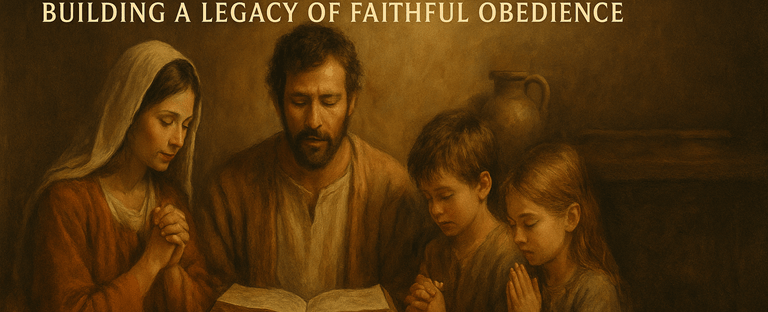
Love That Disciples: Building a Legacy of Faithful Obedience

From the series “The Love of God”

The love of God does not stop with one generation.
It is not a momentary encounter or an isolated spark.
It is a fire that’s meant to spread—house to house, heart to heart, generation to generation.

God’s covenant love always envisioned a family-shaped faith—one where His Word was not confined to the synagogue, but written on the doorposts of homes and the hearts of children.

“You shall love the Lord your God with all your heart… These words… shall be on your heart. You shall teach them diligently to your sons and shall speak of them when you sit in your house, when you walk on the road, when you lie down, and when you rise up.”
Deuteronomy 6:5–7

This is the rhythm of love passed down.
Not a Sunday ritual, but an all-day life.
Not a moment of emotion, but a movement of obedience.


Love that is real cannot be contained—it trains, instructs, corrects, and encourages. It sets boundaries and teaches mercy. It points to Christ not just with lips, but with living witness.

“We loved you so much that we were delighted to share with you not only the gospel of God but our own lives as well, because you had become dear to us.”
1 Thessalonians 2:8

The early Church understood this.
They did not build youth ministries.
They built households of faith.
They did not outsource discipleship.
They embraced it as the calling of every father, mother, brother, and sister in Christ.


The Apostolic Constitutions (c. 3rd–4th century):
“Let the home be the little church… where the father teaches, the mother prays, and the children grow in the fear of the Lord.”
Book VI, Ch. 2

Clement of Alexandria (c. 195 AD):
“The true Christian family is a school of righteousness. The father is the shepherd, the mother the helper, and the children are trained not with threats but in the love and fear of God.”
Paedagogus, Book III

They saw the home as the battlefield and the sanctuary.
And their children were not left to culture’s voice—they were raised in the words and ways of the King.


If the love of God has reached us, it must move through us.
We do not simply receive. We entrust.

“The things which you have heard from me… entrust these to faithful people who will be able to teach others also.”
2 Timothy 2:2

Love that disciples does not hoard truth.
It hands it down.
It guards the gospel, not by hiding it, but by planting it in others who will carry it forward.


We are not called to simply raise children.
We are called to raise disciples—those who will know the love of God, obey His voice, and make Him known long after we are gone.

This is the love that multiplies.
This is the love that endures.

And it is the only kind that leaves a legacy worth leaving.


📚 Sources & References — Part 10

Love That Disciples: Building a Legacy of Faithful Obedience

Scripture (NASB 1995):

  • Deuteronomy 6:5–7 – “Teach them diligently to your children…”
  • 1 Thessalonians 2:8 – “We were delighted to share not only the gospel, but our own lives…”
  • 2 Timothy 2:2 – “Entrust these to faithful people…”

Ante-Nicene Sources:

  • Apostolic Constitutions, Book VI, Ch. 2.
    “Let the home be the little church…”
    [Available at: NewAdvent.org or EarlyChristianWritings.com]
  • Clement of Alexandria, Paedagogus, Book III.
    “The true Christian family is a school of righteousness…”
    [Available at: CCEL.org]
2–4 minutes

Leave a comment

Devotions, Women's Devotionals

🏡 Kingdom Family Devotional — Day 61

“Do not judge so that you will not be judged…”

Matthew 7:1 NASB1995

🪞 Grace Begins at Home

As mothers, it’s easy to see faults—in our kids, others, or even ourselves. But Jesus calls us to lead with grace, not criticism.

Raising children in the Kingdom means showing them how to correct in love, not condemnation.

📖 Talk About It:

  • What’s the difference between judgment and discernment?
  • How can we model gracious correction at home?

🧺 Kingdom Practice:

When conflict arises, pause and pray before reacting. Ask: “Am I helping or just criticizing?”

✍️ Prayer:

Lord, help me lead with mercy. Teach me to see others through Your eyes and to guide my children in grace. Amen.

Devotions, Teen Devotions

😎 Kingdom Teen Devotional — Day 61

“Do not judge so that you will not be judged…”

Matthew 7:1 NASB1995

😶 Drop the Gavel

Snap judgments happen fast—especially online. But Jesus reminds us: we’ll be measured by the same standard we use.

Kingdom living means ditching harsh opinions for grace-filled honesty. It means being real without being ruthless.

🖊 Real Talk:

  • Are you quick to label someone without knowing their story?
  • How can you reflect Jesus in your words this week?

✍️ Prayer:

God, forgive me for judging others too quickly. Help me speak with truth and love, just like Jesus. Amen.

Children's Devotionals, Devotions

🧢 Kingdom Kids Devotional — Day 61

“Don’t judge others, or you’ll be judged too!”

Matthew 7:1 (Paraphrased)

🧸 Be Kind Like Jesus

It’s easy to notice when someone else messes up—but Jesus says to be kind and not judge. We all need help sometimes, and we should treat others how we want to be treated.

Being part of God’s Kingdom means using our words to help, not hurt.

🕊 Then and Now

Even kids long ago tried to follow Jesus by being kind and gentle with their friends. You can too!

💡 Think About It:

  • Have you ever said something mean about someone?
  • How could you encourage them instead?

✨ Let’s Pray:

Jesus, help me use kind words and not be mean or bossy. I want to treat others like You do. Amen.

Devotions, Women's Devotionals

🌿 Kingdom Living Devotional — Day 61

“Do not judge so that you will not be judged. For in the way you judge, you will be judged; and by your standard of measure, it will be measured to you.”

Matthew 7:1–2 NASB1995

🕊 Kingdom Mercy

Jesus isn’t telling us to avoid discernment—but to reject harsh, self-righteous judgment. The Kingdom heart is one of humility, knowing we all need grace.

To judge rightly is to judge with mercy. And that begins with remembering the mercy we’ve received.

🔗 Ante-Nicene Reflection

The early Christians corrected sin, but always with tears, prayers, and self-examination. Judgment without love was seen as prideful—never a reflection of Christ.

💭 Reflect:

  • Are you quick to criticize others?
  • What would it look like to extend mercy instead?

✨ Prayer:

Father, make me slow to judge and quick to love. Let my words reflect Your grace, not my pride. Amen.

Kingdom Discipleship, Kingdom Living

Mothers and Mentors

Women Who Raise the Standard

Women are not secondary in God’s Kingdom—they are foundational. From the early Church to today, women have played a vital role in raising the next generation, discipling the young, and modeling the way of Christ with strength, wisdom, and sacrificial love.

“She opens her mouth with wisdom, and the teaching of kindness is on her tongue.”
Proverbs 31:26


Spiritual Motherhood Is a Kingdom Calling

Whether biological mothers, adoptive parents, or spiritual mentors, all women in Christ are called to nurture, instruct, and lead others toward godliness. This is not about platform—it’s about presence.

“Older women… are to teach what is good, and so train the young women…”
Titus 2:3–5

“Let every woman train the younger in the fear of the Lord and in the meekness of Christ.”
Didache, ch. 4


Biblical Mentorship Is Relational, Not Transactional

Discipleship isn’t just about curriculum—it’s about life-on-life. It’s about being present, listening, correcting with grace, and leading by example. The early Church emphasized relational formation, especially among women.

“Let the older be as mothers and the younger as daughters in the Lord.”
Ignatius of Antioch, Letter to Polycarp


The Early Church Honored Godly Women

From Priscilla, who helped instruct Apollos, to the widows who served in prayer and mercy, godly women were esteemed as pillars of the Church.

“The widows are the altar of God. Their prayers uphold the Church.”
Hermas, Similitudes 9


Raising the Standard Through Everyday Faithfulness

Raising the next generation doesn’t require a stage—it requires consistency, humility, and love that disciples through example.

“Your adornment must not be external… but the hidden person of the heart with the imperishable beauty of a gentle and quiet spirit.”
1 Peter 3:3–4


What We Can Learn

  1. Spiritual motherhood is essential to Kingdom legacy.
  2. Mentorship is relational, rooted in presence and love.
  3. Godly women shape generations through quiet faithfulness.
  4. The Church thrives when women raise the standard of holiness.

Sources:

  • The Holy Bible — Proverbs 31:26; Titus 2:3–5; 1 Peter 3:1–6; Acts 18:26; 2 Timothy 1:5
  • Didache, ch. 4
  • Ignatius of Antioch, Letter to Polycarp
  • Hermas, Similitudes 9
  • Clement of Rome, 1 Clement 21

1–2 minutes

Leave a comment