Kingdom Discipleship, Kingdom Living

How the Ante-Nicene Christians Interpreted Scripture

In today’s theological world, interpretation of Scripture often gets filtered through denominational lenses, academic traditions, or philosophical frameworks. But the early Christians—those who lived before the Council of Nicaea—read Scripture much differently. Their understanding wasn’t shaped by seminaries or systematic theologies, but by discipleship, persecution, and the Holy Spirit.

Before creeds were formalized and councils held power, these believers leaned wholly on the authority of God’s written Word and the Spirit who breathed it.


Scripture Was Final, Not Evolving

To the Ante-Nicene Christians, the canon of Scripture was not a work in progress. While the formal list of New Testament books wasn’t ratified until later, the early church already treated the apostolic writings as divinely authoritative.

“The Scriptures are indeed perfect, since they were spoken by the Word of God and His Spirit.”
Irenaeus, Against Heresies 2.28.2

They didn’t see the need for developing theology—because they believed the Word was sufficient. Their task was not to add to it or systematize it, but to live it out faithfully.


Interpretation Through the Holy Spirit, Not Human Systems

The early Christians believed the Holy Spirit was the Teacher of the Church.

“But the anointing that you received from Him abides in you, and you have no need that anyone should teach you… His anointing teaches you about everything.”
1 John 2:27

Their writings reflect constant prayer, fasting, and humility in seeking to understand God’s Word—not reliance on external traditions or evolving doctrines.

This wasn’t individualism or rebellion—it was a Spirit-led submission to the authority of Scripture. They trusted that the same Spirit who inspired the Word could also illuminate it to every believer, not just to elite teachers.


They Interpreted Literally—Unless the Text Was Clearly Symbolic

These believers took the words of Jesus and the Apostles seriously. When Jesus said “love your enemies,” they didn’t allegorize it. They practiced it—often to the death. Their lives bore literal obedience to commands like:

  • Blessed are the persecuted
  • Do not resist an evil person
  • Give to those who ask
  • Turn the other cheek

They believed the commands of Christ were meant to be lived, not just admired.

Allegorical interpretation only appeared later, influenced by thinkers like Origen and Clement of Alexandria—men who were shaped more by Greek philosophy than by the simple obedience of the early church.


The Word Was Lived in Community

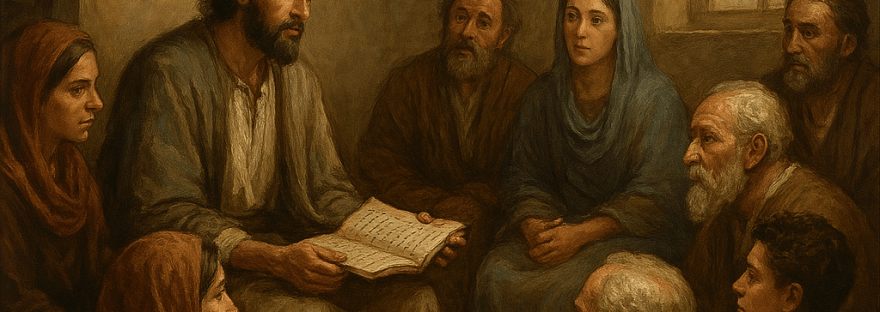
Scripture wasn’t read and interpreted in isolation. The early church gathered in homes, read aloud the Gospels and Epistles, and submitted to one another as they sought the Spirit’s guidance. Even without formal education, they understood the power and clarity of God’s Word.

“Let us therefore hold steadfastly and unceasingly to our hope and the guarantee of our righteousness, who is Jesus Christ… Let us look steadfastly to Him.”
Clement of Rome, 1 Clement 36

They didn’t see themselves as theologians—but as servants. The goal was not intellectual mastery, but transformation and obedience.


What We Can Learn Today

  1. The Holy Spirit is still the best teacher of Scripture.
  2. Literal obedience matters more than theological precision.
  3. Faithful community fosters clarity.
  4. Doctrinal systems must be tested against the plain reading of the Word.

A Warning for Today’s Church

Many today no longer trust the plain reading of Scripture—preferring the interpretations of scholars, theologians, or movements. But if the early church had followed such systems, the gospel would never have spread. It was their simple, radical trust in the Word and the Spirit that shook the world.

Let’s return to that simplicity—where God’s Word is enough, and His Spirit leads us into all truth.


Sources:

  • The Holy Bible — 1 John 2:27
  • Irenaeus, Against Heresies, 2.28.2
  • Clement of Rome, 1 Clement 36
  • Acts 2:42; John 14:26
3–4 minutes

Leave a comment

Kingdom Discipleship, Kingdom Living

The Kingdom Constitution — Living the Sermon on the Mount

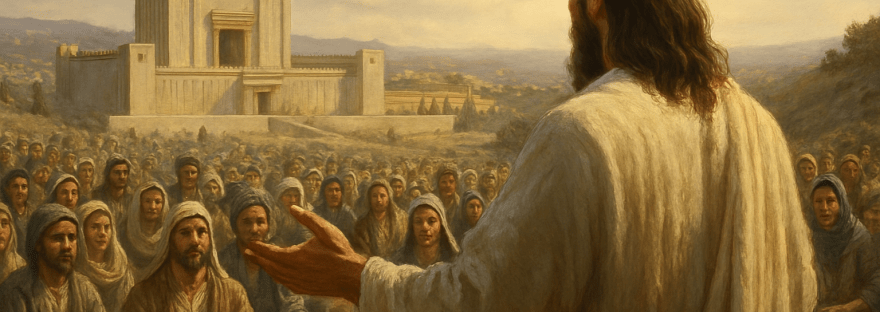
When Jesus preached the Sermon on the Mount (Matthew 5–7), He wasn’t giving inspirational sayings or poetic ideals. He was delivering the constitution of a new Kingdom—a Kingdom not of this world, where the citizens would reflect the heart, values, and priorities of their King.

To the early Church, especially the Ante-Nicene Christians, the Sermon on the Mount was not optional or symbolic. It was the blueprint for life—a radical call to holiness, humility, mercy, justice, and love. It governed how they lived, how they suffered, how they loved their enemies, and how they viewed themselves in this present world.


Not Just a Sermon, But a Standard

Jesus begins with the Beatitudes—blessings not on the powerful or influential, but on the meek, the merciful, the persecuted, and the pure in heart. In these verses, He is not describing ideal traits for a few spiritual elites—He is painting a picture of what every citizen of His Kingdom looks like.

“Blessed are the peacemakers, for they shall be called sons of God.”
Matthew 5:9


The Early Church Took It Literally

To them, Jesus’ words weren’t open to interpretation—they were a call to action. They blessed their persecutors, refused to retaliate, gave generously, avoided oaths, and turned the other cheek. They refused to participate in military service, capital punishment, or any action that would require harming others—because they believed that only the Kingdom of God deserved their ultimate allegiance.

They believed:

  • Christ was their only King
  • The Church was their true nation
  • The Sermon on the Mount was their law

Their citizenship was in heaven (Philippians 3:20), and they lived as ambassadors of a foreign Kingdom here on earth (2 Corinthians 5:20).


Aliens and Strangers in the World

Because of their unwavering obedience to Christ, the early Christians were often misunderstood. They did not engage in political power plays. They avoided civil posts that required judgment or violence. They obeyed the government—unless it contradicted the Word of God. Then, like the apostles before them, they practiced civil disobedience with peace and boldness.

“We must obey God rather than men.”
Acts 5:29

This made them outcasts. It cost them status, jobs, homes, and sometimes their lives. But they would not trade Kingdom citizenship for worldly security.


Why It Matters Today

The modern Church often preaches about the Kingdom, but few live as citizens of it. We are quick to defend rights, fight enemies, and pursue comfort—often at the expense of Christ’s commands. But Jesus said:

“Not everyone who says to Me, ‘Lord, Lord,’ will enter the Kingdom of Heaven, but the one who does the will of My Father…”
Matthew 7:21

Kingdom citizenship isn’t about belonging to a church. It’s about embodying the values of the King—here and now.


What We Must Recover

  1. A literal commitment to the Sermon on the Mount
  2. An identity rooted in the Kingdom of God, not the kingdoms of men
  3. An allegiance to Christ that shapes all relationships, actions, and responses
  4. A visible difference that causes the world to take notice

Sources:

  • The Holy Bible — Matthew 5–7; Philippians 3:20; 2 Corinthians 5:20; Acts 5:29
  • Letter to Diognetus, c. AD 130–200
  • Origen, Against Celsus (on refusal to join military)
  • Justin Martyr, First Apology (on obedience to Christ over Caesar)
2–3 minutes

Leave a comment

Kingdom Discipleship, Kingdom Living

Servant Leadership and Simplicity

In today’s church culture, titles, leadership platforms, and structured hierarchies are often assumed to be part of faithful church practice. But the early Christians—those who lived between AD 33 and AD 325—embraced a radically different model of leadership. Their lives were marked not by authority over others, but by servanthood under Christ.

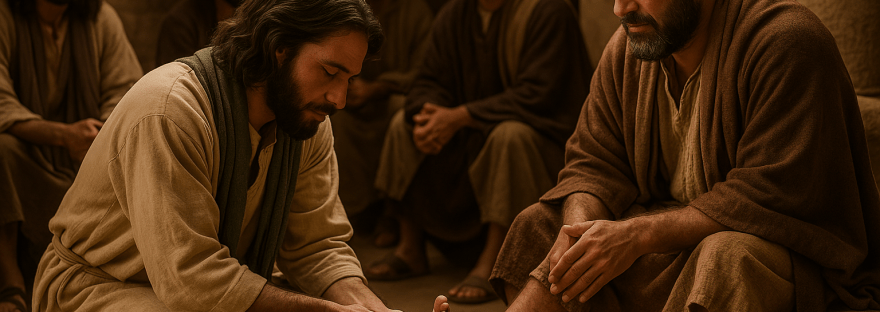
Leadership, to them, meant dying to self, living in humility, and shepherding others through example—not position.


They Followed the Example of Christ and the Apostles

Jesus said:

“The greatest among you shall be your servant. Whoever exalts himself will be humbled, and whoever humbles himself will be exalted.”
Matthew 23:11–12

This wasn’t a metaphor to them—it was a way of life. The early church imitated this model. Leaders weren’t elevated above the body but walked among them, sharing meals, burdens, prayers, and persecution. Titles like “Reverend,” “Most Holy,” or even “Bishop” in the later sense were foreign to the earliest believers.

Paul referred to himself as a slave of Christ (Romans 1:1), not a spiritual elite. Peter called himself a fellow elder (1 Peter 5:1), not a ruling overseer.


Elders and Deacons, Not Religious Offices

The early church recognized elders and deacons, but these were functions, not formal offices. Elders were to shepherd the flock by example (1 Peter 5:2–3), teach faithfully, and guard the body from false teaching. Deacons served the practical needs of the church (Acts 6:1–6).

They did not wear robes, sit on thrones, or live apart from the people. They labored with their hands, often poor and persecuted alongside the rest of the church.

“We do not speak great things—we live them.”
Cyprian, c. AD 250


They Rejected the Pursuit of Status

As the church began to gain influence, especially after Constantine, some leaders accepted state favor, wealth, and power. But before this shift, the Ante-Nicene leaders refused to chase status.

Many actively rejected positions of authority or fled from recognition. Leadership was not sought after but reluctantly accepted, and only by those proven faithful in character.

“Let no one exalt himself… let the honor be given by others, not seized for oneself.”
Didache, ch. 15

They were deeply aware of their weaknesses, and they didn’t want anything that would distract from serving Christ or His people.


Simplicity in Life and Worship

These believers lived simply. They gathered in homes. Their worship wasn’t performance-driven but Spirit-led. There were no stages, lighting, or platforms—only Scripture, prayer, mutual edification, and the breaking of bread (Acts 2:42).

This simplicity wasn’t poverty—it was freedom. Free from systems. Free from religious show. Free to focus on Christ and one another.


Why This Matters Today

The Church has often drifted from the humility of its beginnings. Leadership has become professionalized. Buildings have replaced homes. Titles have overtaken relationships. And the result? A weakened witness to the world.

But the example of the early church calls us back—not to romanticize the past, but to recover a posture of servanthood, simplicity, and spiritual power.


What We Can Learn

  1. True leadership is service.
  2. Simplicity fosters authenticity.
  3. The body of Christ thrives when every member is honored.
  4. We must guard against the temptation to elevate systems over Spirit-led relationships.

Sources:

  • The Holy Bible — Matthew 23:11–12; Romans 1:1; 1 Peter 5:1–3; Acts 2:42; Acts 6:1–6
  • Cyprian, Epistles, c. AD 250
  • Didache, ch. 15

2–3 minutes

Leave a comment

Kingdom Discipleship, Kingdom Living

The Spread of the Gospel Before Nicaea

How did the gospel go from a small band of disciples in Jerusalem to a global movement spanning empires—all without political power, printing presses, or large buildings? Before the Council of Nicaea in AD 325, Christianity had already spread like wildfire across the known world. But it didn’t spread the way religions do today—it spread through persecution, love, and uncompromising obedience to Christ.

From Jerusalem to the Ends of the Earth

Jesus’ final command was clear:

“You will be my witnesses in Jerusalem, and in all Judea and Samaria, and to the ends of the earth.”
Acts 1:8

By the end of the book of Acts, the gospel had already reached Rome. But that was only the beginning. The first three centuries of Christianity were marked by relentless expansion—not through organized missions boards or campaigns, but through ordinary believers living out their faith in the marketplaces, fields, prisons, and homes of the Roman Empire.


Evangelism Through Persecution

Persecution was fierce and constant in many regions during this period. Yet this didn’t slow the gospel—it accelerated it.

“The blood of the martyrs is the seed of the church.”
Tertullian, Apology 50

Rather than scare believers into silence, persecution emboldened them. Their courage, joy, and refusal to recant made the world take notice. Many came to faith after watching Christians face lions, fire, and swords with peace on their faces and forgiveness on their lips.


House to House, Village to Village

The church grew underground, yet it wasn’t hidden. Christians met in homes (Romans 16:5), shared meals, and welcomed strangers. As they traveled for work or trade, they carried the gospel with them. No church buildings. No budgets. Just transformed lives and the Word of God.

Eusebius writes that churches could be found in nearly every city and village of the empire by the early 300s:

“The word of salvation was zealously preached… churches were multiplied and grew from small beginnings.”
Eusebius, Church History 8.1


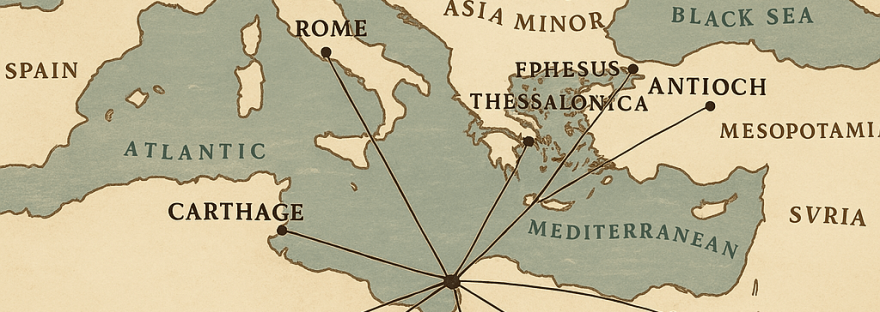
Geographical Reach by the 3rd Century

Here’s a glimpse of how widespread the Church became by AD 300:

  • Italy & Rome – thriving despite intense persecution
  • North Africa – home to Tertullian, Cyprian, and others
  • Egypt & Alexandria – a major center of early Christian teaching
  • Asia Minor – vibrant churches from Paul’s time, many still active
  • Gaul (modern France) – early martyrdoms like those in Lyon
  • Germany & Britain – evidence of Christian communities by late 2nd to 3rd centuries
  • Persia, Armenia, and beyond – reaching into the East before Rome ever recognized Christianity

The gospel was already global before it was ever legal.


Carried by the Faithful, Not the Famous

The Church’s expansion wasn’t led by celebrity pastors or state-sponsored missionaries. It was carried on the backs of slaves, merchants, mothers, soldiers, and widows—men and women who understood they were part of something eternal.

“Christians are not distinguished from the rest of mankind by country, language, or customs… yet they display to us a wonderful and confessedly striking method of life.”
Letter to Diognetus, c. AD 130–200

They preached by their actions. They discipled by example. And they evangelized by love.


What We Learn Today

  1. You don’t need a platform to spread the gospel. You need obedience.
  2. The Spirit leads the willing. Many early Christians didn’t plan to evangelize—they simply refused to hide Christ.
  3. The gospel is not bound by borders. Even in places where persecution raged, the church thrived.
  4. We must recover the simplicity and power of everyday witness. Before there were systems, there were saints who walked with Christ and changed the world.

Sources:

  • The Holy Bible — Acts 1:8; Romans 16:5
  • Tertullian, Apology 50
  • Eusebius of Caesarea, Church History, Book 8
  • Letter to Diognetus, c. AD 130–200
  • Stark, R. (1996). The Rise of Christianity. HarperOne
3–4 minutes

Leave a comment

Kingdom Discipleship, Kingdom Living

Who Were the Ante-Nicene Christians?

The term Ante-Nicene Christians refers to the followers of Jesus who lived between AD 33 and AD 325—after Christ’s ascension but before the institutionalizing of Christianity under Emperor Constantine at the Council of Nicaea. This was the church in its purest, most persecuted, and Spirit-dependent form. While they are rarely mentioned in modern pulpits or popular Christian media, these believers carried the torch of the gospel through some of the most hostile times in history.

Disciples of Disciples

These were not isolated believers forming new traditions. They were disciples of the Apostles’ disciples, following the oral teachings and written Scriptures handed down to them by men like Paul, Peter, and John. Polycarp was taught by the Apostle John. Clement of Rome knew Paul. These early leaders passed on not only the Scriptures but the example of holy living, humility, and sacrificial love.

“Let us then draw near to Him in holiness of soul, lifting up pure and undefiled hands unto Him, loving our gracious and compassionate Father…”
Clement of Rome, 1 Clement 29

Led by the Holy Spirit

They had access to the Scriptures, but they didn’t interpret them through man-made systems or evolving theology. They believed the Holy Spirit—who authored the Word—was also the One who illuminated its meaning. Through prayer, fasting, and faithful obedience, they relied on God to understand and live out His Word (John 14:26; 1 John 2:27).

They saw themselves not as theologians building doctrines, but as bondservants of Christ obeying what had already been revealed.

Rooted in the Language and Culture of Christ and the Apostles

The Ante-Nicene Christians spoke Koine Greek, the very language in which the New Testament was written. Their cultural framework was the same as that of the Apostles. They understood context not through archaeology or seminary study, but through daily life. Their faith wasn’t filtered through centuries of Western philosophy—it was lived in the streets and homes of the first-century Roman world.

The Gospel Spread Without Institutional Power

By the early 300s, Christianity had reached nearly every corner of the Roman Empire—and beyond. From North Africa to Gaul, from Asia Minor to Rome, local house churches were springing up without centralized leadership or political clout. They had no government funding, no church buildings, and no legal protection—only their testimony, the Word of God, and the Spirit of God.

“The doctrine of the apostles is known to all who wish to know the truth.”
Irenaeus, Against Heresies 1.10.2

Unified but Decentralized

Despite being scattered geographically, they were united in doctrine. Their unity came not from creeds or councils, but from the Scriptures and the indwelling Holy Spirit. They met in homes (Acts 2:46; Romans 16:5), shared their possessions, prayed for one another, and lived in sacrificial community. No denominations. No institutional hierarchy. Just a common Lord and a shared obedience to His Word.

Marked by Sacrificial Love

Their most powerful witness was not their arguments, but their love—for one another and even for their persecutors.

“See how they love one another… and how they are ready to die for each other.”
Tertullian, Apology 39

“They love one another… they do not hesitate to risk their lives for the name of their Messiah.”
Letter to Diognetus, c. 130–200 AD

They endured imprisonment, torture, confiscation of property, and martyrdom with joy—not as victims, but as victors in Christ. Their lives proved the power of the gospel.

Not Infallible, but Faithful

It’s important to remember: their writings were not Scripture. These were human beings, subject to error like the rest of us. But they didn’t seek to create systems—they sought to remain faithful to what was handed down (2 Thessalonians 2:15). Their goal was not theological innovation, but faithful preservation.

They didn’t live to become heroes—they lived to glorify Christ. And their lives echo through history as reminders of what the Church looks like when it is fully dependent on the Holy Spirit, rooted in the Word, and surrendered to the Kingdom of God above all else.


Sources:

  • Clement of Rome. 1 Clement. (c. AD 95)
  • Irenaeus. Against Heresies. (c. AD 180)
  • Letter to Diognetus. (c. AD 130–200)
  • Tertullian. Apology 39. (c. AD 197)
  • Eusebius of Caesarea. Church History
  • Scripture: John 14:26; 1 John 2:27; Acts 2:46; Romans 16:5; 2 Thessalonians 2:15
3–4 minutes

Leave a comment

Editor's Picks, Kingdom Discipleship, Kingdom Living

Why Look Back to Move Forward?

The Ante-Nicene Christians—those who lived between AD 33 and 325—weren’t superhuman saints. They were men and women like us. What made them distinct wasn’t special status or superior knowledge, but their radical faith, sacrificial love, and unwavering loyalty to the teachings of Christ. These were the disciples of the disciples, and their witness shook empires.


Who Were the Ante-Nicene Christians?

The term Ante-Nicene refers to the Christians who lived before the Council of Nicaea in AD 325. Their faith flourished not in freedom or comfort but in the midst of intense persecution. They didn’t rely on seminaries or institutionalized church systems. They followed the written Word of God, the oral teaching passed down from the Apostles, and the living guidance of the Holy Spirit (John 14:26; 1 John 2:27).

They were:

  • Disciples of disciples — directly trained by those who had been taught by the Apostles.
  • Anchored in Scripture — believing it to be complete and sufficient. They sought the Holy Spirit for understanding, not evolving human traditions.
  • Fluent in context — They lived in the same Greco-Roman world, understood the Koine Greek language, and read Scripture without needing to “bridge” historical gaps.
  • Unified and scattered — They met in homes, not cathedrals, yet they were deeply united in faith across continents because they trusted the Word and the Spirit—not centralized authority or councils.

By the early 4th century, Christianity had spread through nearly every province of the Roman Empire—and beyond. Eusebius, the early church historian, recorded that the message of Christ had reached “all the nations” even before Constantine’s reign (Eusebius, Ecclesiastical History, 3.1).


What Were They Known For?

Perhaps the most compelling testimony doesn’t come from Christians themselves, but from their Roman persecutors.

Tertullian, writing around AD 197, defended Christians against Roman accusations in his work Apologeticus. In chapter 39, he says:

“It is mainly the deeds of a love so noble that lead many to put a brand upon us. ‘See,’ they say, ‘how they love one another!’”

This wasn’t Tertullian boasting—it was his account of what the pagans were saying about Christians. Their persecutors were bewildered. These people didn’t just love their friends—they loved their enemies. They didn’t cling to life—they gave it away. They took in orphans, buried the poor, and rescued unwanted infants from death (Justin Martyr, First Apology, 67; Aristides, Apology).

Roman Emperor Julian the Apostate, a later critic of Christianity, begrudgingly admitted in the 4th century:

“It is disgraceful that the impious Galileans support not only their own poor but ours as well; all men see that our people lack aid from us.”
Letter to Arsacius, c. AD 362

Even when slandered or martyred, the early Church was unmistakably marked by this Kingdom love—poured out from a heart changed by the Spirit.


What Set Them Apart?

These early believers didn’t call themselves “theologians.” They didn’t take titles. They didn’t isolate into monasteries or create layers of leadership. Their lives were marked by humility, holiness, and servanthood.

They saw themselves as:

  • Slaves of Christ (Romans 6:22),
  • Aliens and strangers in this world (1 Peter 2:11),
  • Ambassadors of a Kingdom not of this earth (2 Corinthians 5:20).

They refused to kill, even in war or self-defense. They refused to worship Caesar or offer a pinch of incense, even if it cost them their life. Why? Because they believed what Jesus said in Matthew 5–7 was not just a poetic sermon—but the Constitution of Heaven.


Why This Matters Today

Today, the modern Church—especially in the West—has lost much of its saltiness. The world often can’t tell the difference between a false Christian and a real one. Even faithful churches struggle to impact the world the way the early church did. Why?

Because we’ve traded in Kingdom living for cultural acceptance. We’ve treated the Sermon on the Mount like a suggestion instead of the standard.

But if we are truly Christ’s—if we are His slaves and sons—we must return to that radical, holy, love-filled walk that marked the early believers. Not with pride in them, but with worship toward the same God who empowered them to persevere.

“They overcame him because of the blood of the Lamb and because of the word of their testimony, and they did not love their life even when faced with death.”
— Revelation 12:11 (NASB 1995)

I don’t glorify these early Christians—God already has. He called them “those of whom the world was not worthy” (Hebrews 11:38). They didn’t just die for Jesus—they lived completely for Him.


What’s Ahead

In the coming weeks, I’ll explore their writings, their testimonies, and most importantly, the Scriptures that shaped them. We’ll test everything—past and present—by the Word of God, seeking the interpretation of the Holy Spirit, not men.

Let’s walk this journey together, rooted in Scripture and raised in Christ.


📚 Sources & References

·  Scripture:

  • John 14:26
  • 1 John 2:27
  • Jude 3
  • Hebrews 11:38–40
  • Revelation 12:11
  • Romans 6:22
  • 1 Peter 2:11
  • 2 Corinthians 5:20
  • Matthew 5–7

·  Historical & Early Church Writings:

  • Tertullian, Apology, ch. 39 (c. AD 197)
  • Eusebius, Ecclesiastical History, 3.1
  • Justin Martyr, First Apology, ch. 67
  • Aristides, Apology
  • Emperor Julian, Letter to Arsacius (c. AD 362)
  • Rodney Stark, The Rise of Christianity, HarperOne, 1996
4–5 minutes

Leave a comment