
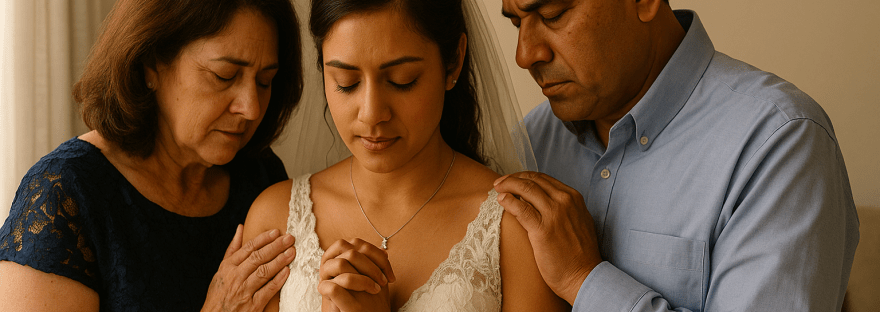
From the Series: The Biblical Jesus and His Bride
Scripture quotations are from the New King James Version®.
Copyright © 1982 by Thomas Nelson. Used by permission. All rights reserved.
The story of Scripture, from Genesis to Revelation, moves toward a clear goal: a wedding. God is always shown as the one who makes, keeps, and fulfills His promises. The first promise in Eden is finally fulfilled in the union of Christ and His Church.
John’s vision in Revelation says, “Let us be glad and rejoice and give Him glory, for the marriage of the Lamb has come, and His wife has made herself ready” (Revelation 19:7, NKJV). This is a statement of prophetic certainty, not just poetic language. The Bridegroom is the Lamb who was slain. Redemption stays at the center, even in glory. The wedding does not take away from the cross; it confirms its importance.
Today, many people view Christ’s return with fear, speculation, or as only a symbol. Some focus on dates and create anxiety. But Revelation 19 offers another view: “Blessed are those who are called to the marriage supper of the Lamb!” (Revelation 19:9, NKJV). For believers, this is a time of celebration, not fear. The Bride welcomes her Bridegroom with joy. The promise is fulfilled, waiting ends, and separation is over. It creates a subtle distortion: when the Church forgets that she is the Bride, the return of Christ feels threatening rather than joyful. But when covenant love is remembered, the coming of Christ is not escape—it is homecoming.
John also says, “And to her it was granted to be arrayed in fine linen, clean and bright, for the fine linen is the righteous acts of the saints” (Revelation 19:8, NKJV). This clothing is given, not made by her; her righteousness is a gift, not something she earns. Justification and sanctification go together: the Bride is made righteous through Christ and lives righteously by the Spirit’s work. Today, people often separate these ideas, either downplaying change in the name of grace or stressing performance to be holy. But Scripture keeps them together.
This union of Christ’s gift and the Spirit’s work is not only theological; it shapes daily life. To receive Christ’s righteousness is to be freed from striving for approval, while living by the Spirit means responding to God’s grace with real trust and obedience. It impacts how we approach relationships, make decisions, and respond to challenges. When believers understand that their worth is secure in Christ and their actions are empowered by the Spirit, everyday choices—such as extending forgiveness, pursuing honesty, and acting with compassion—become practical expressions of faith. The gospel is not simply a future hope but an immediate way of living.
The Marriage of the Lamb is not a private event, but a cosmic declaration. Throughout history, the Church has been misunderstood, persecuted, and marginalized. Her loyalty has often seemed weak, and her faithfulness has been costly. The wedding, however, reveals an eternal reality: the One who was rejected is revealed as King, and His people as His own. Paul affirms, “When Christ who is our life appears, then you also will appear with Him in glory” (Colossians 3:4, NKJV). The Bride’s glory is derived; she appears with Him, emulating His radiance rather than her own.
Revelation moves us from the supper to being in God’s presence: “Behold, the tabernacle of God is with men, and He will dwell with them, and they shall be His people” (Revelation 21:3, NKJV). The wedding is not simply a celebration; it is about being with God again. Sin no longer separates us. The veil is gone. The Bride does not just attend a feast; she lives with her Bridegroom. “They shall see His face” (Revelation 22:4, NKJV). There is no need for a mediator, shadow, or temple. The Lamb who saved now reigns in full glory.
Redemption ends not just with union, but with restoration: “God will wipe away every tear from their eyes; there shall be no more death, nor sorrow, nor crying” (Revelation 21:4, NKJV). This is not just a consoling thought, but the fulfillment of God’s promise. The Bride’s struggles are not forgotten; they prepare her for glory. While people today may look for relief, Scripture promises real restoration.
The wedding does not end in longing, but in loss. “And they shall reign forever and ever” (Revelation 22:5, NKJV). The Bride does not just survive; she reigns with her King. This reign is not about being independent, but about sharing in His inheritance: “If we endure, we shall also reign with Him” (2 Timothy 2:12, NKJV). Our endurance now leads to shared glory. The Church’s suffering does not determine her future; her destiny is to reign with Christ, not to stay on the margins.
For those walking through pain or uncertainty now, this promise is profoundly personal. Present trials can feel heavy and at times overwhelming, but the assurance of sharing Christ’s inheritance brings encouragement. Every struggle and faithful act of endurance is seen by God and is integrated into the hope of a realm where sorrow is finished, and joy is made complete. This promised reign does not ignore our hardships, but redeems them, giving courage to hold fast and hope that suffering is never wasted.
Scripture concludes not with explanation, but with an exchange: Christ declares, “Surely I am coming quickly,” and the Bride responds, “Amen. Even so, come, Lord Jesus!” (Revelation 22:20, NKJV). The Spirit and the Bride together say, “Come!” (Revelation 22:17, NKJV). The Church’s final posture is characterized not by fear, confusion, or speculation, but by longing and love.
If the Church forgets the wedding, she focuses too much on the present. Forgetting the Lamb leads to confusion about glory. Ignoring the promise leads to lost hope. But when the Church remembers these truths, she knows her waiting will end, her suffering is not the last word, and she belongs forever.
Practically, we remember these promises through rhythms of prayer, worship, and gathering with others who share the same hope. Allocating time each day for prayer helps our hearts to remember God’s faithfulness. Worship—both individual and collective—lifts our perspective above our circumstances and reminds us of our eternal relationship with Christ. An intentional community with fellow believers offers encouragement and keeps hope alive, especially during seasons of discouragement. Sharing the Lord’s Supper, singing songs that point to Christ’s return, meditating on Scripture, and speaking words of assurance to each other are simple yet powerful ways to focus our attention on the wedding to come. In these practices, the promise stays vivid and fuels endurance.
The Marriage of the Lamb is not simply a symbol; it is the fulfillment of God’s promise. The Bridegroom who has called, redeemed, and made holy will finally keep His promise. This hope shapes how the Bride lives today.
Discover more from Rooted & Raised
Subscribe to get the latest posts sent to your email.

