
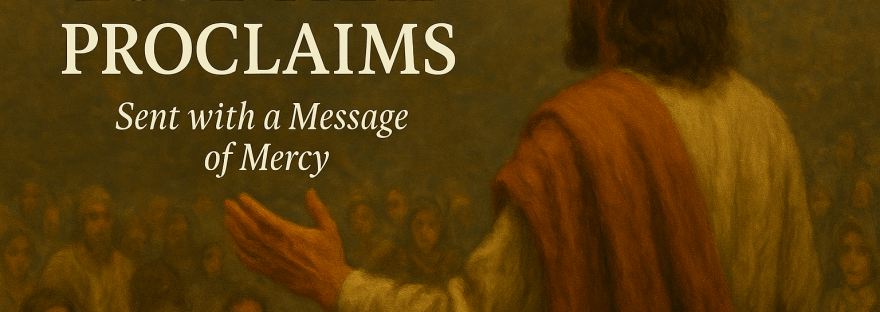
From the series “The Love of God: Revealed, Received, and Radiated”
The love of God does not remain silent. It speaks.
It declares. It invites. It warns.
Love that sees destruction approaching and says nothing is not love at all.
From Genesis to Revelation, God reveals His love not only through actions but through proclamation. His love is not vague or hidden—it is revealed in His Word, and His people are called to carry that Word to the ends of the earth.
“For the love of Christ controls us… He died for all, so that those who live would no longer live for themselves, but for Him who died and rose on their behalf.”
— 2 Corinthians 5:14–15
The Church is not simply a shelter from the world. It is a messenger to it.
Those who have received God’s mercy are commanded to go—not in arrogance, but in the humility and boldness that come from grace.
“We are ambassadors for Christ, as though God were making an appeal through us; we beg you on behalf of Christ, be reconciled to God.”
— 2 Corinthians 5:20
The Apostle Paul didn’t speak as a professional orator. He pleaded as one who had encountered the love of God and could not stay silent.
Love proclaims not because it wants to win arguments, but because it longs to save souls.
A gospel that stays indoors, behind church walls and beneath polished lives, has forgotten the One who left heaven to come find us. Jesus was not ashamed to speak of the Kingdom. He went to villages, synagogues, hillsides, and homes. He taught in the open. He rebuked in love. He invited the weary. He confronted the religious. He never compromised—but He always proclaimed.
The early Church inherited that same commission.
They weren’t trying to build a brand. They were sent to carry a message—one that would get many of them killed. And still, they spoke.
Justin Martyr (AD 100–165):
“For our part, we speak not to win favor or to escape hatred, but to testify to the truth we have received… for love compels us to warn even those who hate us.”
— First Apology, Ch. 17
The Roman Empire didn’t tolerate such messages.
But the Christians didn’t soften them. They spoke of repentance. They warned of judgment. They proclaimed the mercy of God through the cross of Christ. And they did it with tears, not just arguments.
Origen (AD 185–254):
“When we go forth to proclaim Christ, we do not go as those who condemn, but as those who plead. We speak of love, that they may be saved.”
— Contra Celsum, Book III
If we have truly received the love of God, we will not remain silent about it.
We will speak with urgency, because time is short.
We will speak with compassion, because we were once lost.
We will speak with courage, because Christ is worth it.
We will speak with clarity, because love is not vague.
“Preach the word; be ready in season and out of season; correct, rebuke, and encourage with great patience and instruction.”
— 2 Timothy 4:2
Proclamation is not reserved for pastors or missionaries.
It is the calling of every redeemed saint.
Whether around the dinner table, in the break room, on the phone, or in the marketplace, the love of Christ compels us to speak.
“Let the redeemed of the Lord say so…”
— Psalm 107:2
The early Church didn’t wait for pulpits.
They proclaimed Christ wherever they went—because the love they had received demanded a response.
We are not called to convince the world with cleverness.
We are called to proclaim Christ crucified—with humility, truth, and love.
This is the love that saved us.
It is also the love that sends us.
Sources & References
Love That Proclaims: Sent with a Message of Mercy
Scripture (NASB 1995):
- 2 Corinthians 5:14–15, 20 – “The love of Christ controls us… we are ambassadors for Christ…”
- 2 Timothy 4:2 – “Preach the word… rebuke, exhort with great patience…”
- Psalm 107:2 – “Let the redeemed of the Lord say so…”
Ante-Nicene Sources:
- Justin Martyr, First Apology, Ch. 17.
“We speak not to win favor… but to testify to the truth… for love compels us.”
[Available at: CCEL.org or EarlyChristianWritings.com] - Origen, Contra Celsum, Book III.
“We do not go as those who condemn, but as those who plead…”
[Available at: NewAdvent.org or EarlyChristianWritings.com]
Discover more from Rooted & Raised
Subscribe to get the latest posts sent to your email.


Leave a comment