
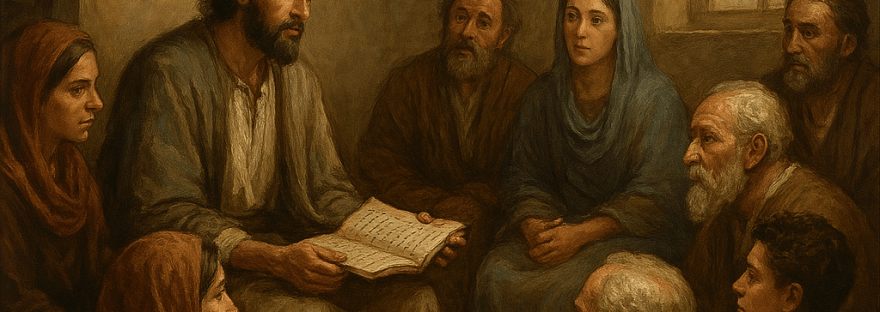
The term Ante-Nicene Christians refers to the followers of Jesus who lived between AD 33 and AD 325—after Christ’s ascension but before the institutionalizing of Christianity under Emperor Constantine at the Council of Nicaea. This was the church in its purest, most persecuted, and Spirit-dependent form. While they are rarely mentioned in modern pulpits or popular Christian media, these believers carried the torch of the gospel through some of the most hostile times in history.
Disciples of Disciples
These were not isolated believers forming new traditions. They were disciples of the Apostles’ disciples, following the oral teachings and written Scriptures handed down to them by men like Paul, Peter, and John. Polycarp was taught by the Apostle John. Clement of Rome knew Paul. These early leaders passed on not only the Scriptures but the example of holy living, humility, and sacrificial love.
“Let us then draw near to Him in holiness of soul, lifting up pure and undefiled hands unto Him, loving our gracious and compassionate Father…”
— Clement of Rome, 1 Clement 29
Led by the Holy Spirit
They had access to the Scriptures, but they didn’t interpret them through man-made systems or evolving theology. They believed the Holy Spirit—who authored the Word—was also the One who illuminated its meaning. Through prayer, fasting, and faithful obedience, they relied on God to understand and live out His Word (John 14:26; 1 John 2:27).
They saw themselves not as theologians building doctrines, but as bondservants of Christ obeying what had already been revealed.
Rooted in the Language and Culture of Christ and the Apostles
The Ante-Nicene Christians spoke Koine Greek, the very language in which the New Testament was written. Their cultural framework was the same as that of the Apostles. They understood context not through archaeology or seminary study, but through daily life. Their faith wasn’t filtered through centuries of Western philosophy—it was lived in the streets and homes of the first-century Roman world.
The Gospel Spread Without Institutional Power
By the early 300s, Christianity had reached nearly every corner of the Roman Empire—and beyond. From North Africa to Gaul, from Asia Minor to Rome, local house churches were springing up without centralized leadership or political clout. They had no government funding, no church buildings, and no legal protection—only their testimony, the Word of God, and the Spirit of God.
“The doctrine of the apostles is known to all who wish to know the truth.”
— Irenaeus, Against Heresies 1.10.2
Unified but Decentralized
Despite being scattered geographically, they were united in doctrine. Their unity came not from creeds or councils, but from the Scriptures and the indwelling Holy Spirit. They met in homes (Acts 2:46; Romans 16:5), shared their possessions, prayed for one another, and lived in sacrificial community. No denominations. No institutional hierarchy. Just a common Lord and a shared obedience to His Word.
Marked by Sacrificial Love
Their most powerful witness was not their arguments, but their love—for one another and even for their persecutors.
“See how they love one another… and how they are ready to die for each other.”
— Tertullian, Apology 39
“They love one another… they do not hesitate to risk their lives for the name of their Messiah.”
— Letter to Diognetus, c. 130–200 AD
They endured imprisonment, torture, confiscation of property, and martyrdom with joy—not as victims, but as victors in Christ. Their lives proved the power of the gospel.
Not Infallible, but Faithful
It’s important to remember: their writings were not Scripture. These were human beings, subject to error like the rest of us. But they didn’t seek to create systems—they sought to remain faithful to what was handed down (2 Thessalonians 2:15). Their goal was not theological innovation, but faithful preservation.
They didn’t live to become heroes—they lived to glorify Christ. And their lives echo through history as reminders of what the Church looks like when it is fully dependent on the Holy Spirit, rooted in the Word, and surrendered to the Kingdom of God above all else.
Sources:
- Clement of Rome. 1 Clement. (c. AD 95)
- Irenaeus. Against Heresies. (c. AD 180)
- Letter to Diognetus. (c. AD 130–200)
- Tertullian. Apology 39. (c. AD 197)
- Eusebius of Caesarea. Church History
- Scripture: John 14:26; 1 John 2:27; Acts 2:46; Romans 16:5; 2 Thessalonians 2:15
Discover more from Rooted & Raised
Subscribe to get the latest posts sent to your email.


Leave a comment