

Passover was instituted by God Himself:
“Now this day will be a memorial to you, and you shall celebrate it as a feast to the LORD; throughout your generations you are to celebrate it as a permanent ordinance.”
— Exodus 12:14, NASB 1995
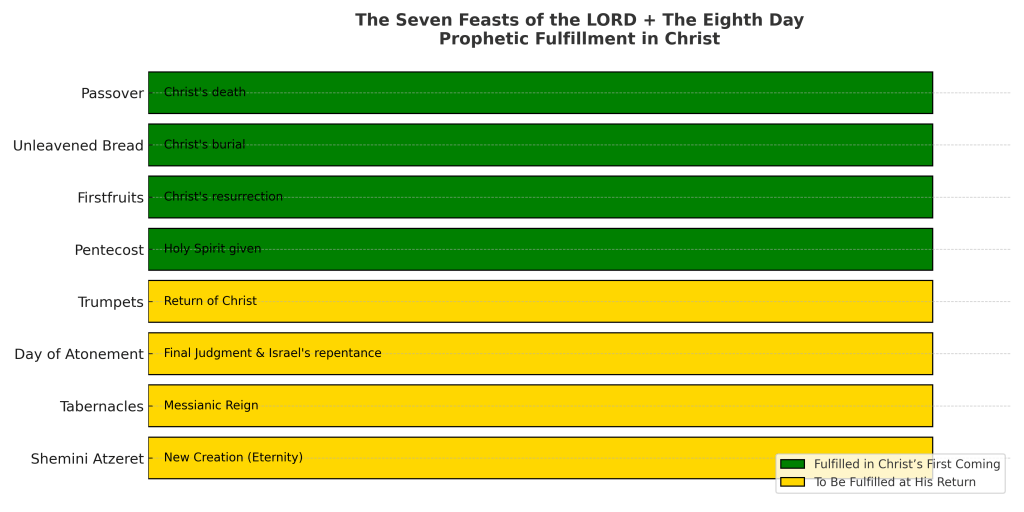
Jesus honored the Passover with His disciples the night He was betrayed (Matthew 26:17–19). He did not replace it, but fulfilled its meaning as the Lamb of God (John 1:29; 1 Corinthians 5:7).
The early Church—especially Jewish believers and even many Gentile believers—continued to commemorate Christ’s death and resurrection in the context of Passover, not outside of it.
⚔️ The Schism: From Obedience to Imperial Power
🔹 Ignatius of Antioch (Early 2nd Century)
- One of the earliest voices urging a departure from “Judaizing.”
- He instructed believers to no longer observe “the Sabbath” as Jews did, but to honor “the Lord’s Day” (Sunday) instead.
This wasn’t merely honoring Christ’s resurrection—it became a repudiation of the Jewish calendar and practice.
🔹 Quartodeciman Controversy (2nd Century)
- Quartodecimans (Latin for “Fourteeners”) observed the death of Christ on the 14th of Nisan, the biblical Passover.
- Others (especially in Rome and Alexandria) preferred celebrating on a Sunday—regardless of the biblical calendar—to distinguish themselves from Jewish practices.
This dispute was widespread and intense. Yet the Quartodecimans were simply following the pattern found in Scripture—what the Apostles and early Church had done.
🔥 Council of Nicaea (AD 325)
This is where the divide became enshrined by law.
Emperor Constantine, who presided over the council (despite being unbaptized and still involved in pagan worship), said:
“…it appeared an unworthy thing that in the celebration of this most holy feast we should follow the practice of the Jews… Let us then have nothing in common with the detestable Jewish crowd…”
— Eusebius, Life of Constantine, Book III, Chapter 18
They decreed that the resurrection should be celebrated on a Sunday, not according to the Jewish calendar, and thus severed the Church’s celebration of Christ’s death and resurrection from its biblical roots.
⚠️ The Result: Easter Replaces Passover
- “Easter” eventually became associated with the pagan spring festival to the goddess Eostre (from which the English name derives).*
- Biblical timing was replaced with ecclesiastical calendars.
- Man-made tradition overtook God’s ordained moedim (appointed times).
“Thus you invalidated the word of God for the sake of your tradition.”
— Matthew 15:6, NASB 1995
✝️ What Did the Early Believers Do?
The Ante-Nicene Church—those who followed Christ between the time of the Apostles and the Council of Nicaea—did not separate the crucifixion and resurrection from Passover. They recognized Jesus as the fulfillment of it, not a replacement.
They obeyed the appointed times (moedim) not as legalistic requirements but as prophetic celebrations pointing to Christ’s redemptive work.
🔥 Final Thoughts: Can Man Override God’s Calendar?
No.
Though councils may decree, emperors may impose, and theologians may rationalize, God’s Word stands.
“Heaven and earth will pass away, but My words will not pass away.”
— Matthew 24:35, NASB 1995
God ordained the feasts as shadows of the substance in Christ (Colossians 2:16–17). They are not to be discarded, but fulfilled in truth and Spirit, not severed from their purpose.
✅ What We Know Historically
*The Name “Easter” Appears in English and German Only
The English word “Easter” is derived from the Old English Ēastre or Ēostre.
The 8th-century historian Bede (in De Natura Rerum and The Reckoning of Time) claimed that the month Ēosturmōnaþ (April) was named after a Saxon goddess called Ēostre, and that Christians adopted the name when celebrating Christ’s resurrection.
“Eosturmonath, which is now interpreted as the Paschal month, was once called after a goddess of theirs named Eostre…” — Bede, The Reckoning of Time, ch. 15
🔍 However:
Bede is the only ancient source who ever mentions this goddess.
There is no archaeological or written evidence (outside of Bede) for a goddess named Eostre being worshiped in Anglo-Saxon or Germanic paganism.
So, while the name might have originated from a springtime festival month, the goddess connection is weakly attested and largely speculative. Nevertheless, man-made tradition overtook God’s ordained moedim (appointed times).


Leave a comment